

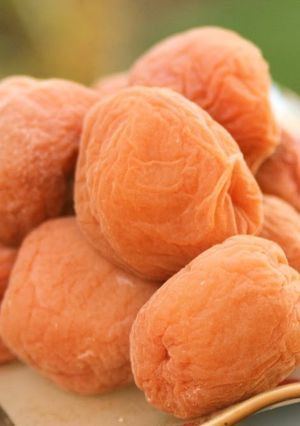
Even Abroad! Not Umeboshi Pickled Plum, but Pickled Apricot

Japanese ingredients are hard to find when living overseas. Even if they are available they are usually expensive or not from Japan etc. When I saw apricots that resembled ume plums I wondered if I could make make something myself to be similar to pickled plums. I researched and fine-tuned to come up with this.
The first apricots of November work well. I used ripe apricots that I was given and they got too mushy.
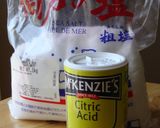
Citric acid can be found alongside the baking powder in supermarkets. I used salt from Hakata Prefecture. Recipe by Machakodesu
Even Abroad! Not Umeboshi Pickled Plum, but Pickled Apricot
Japanese ingredients are hard to find when living overseas. Even if they are available they are usually expensive or not from Japan etc. When I saw apricots that resembled ume plums I wondered if I could make make something myself to be similar to pickled plums. I researched and fine-tuned to come up with this.
The first apricots of November work well. I used ripe apricots that I was given and they got too mushy.
Citric acid can be found alongside the baking powder in supermarkets. I used salt from Hakata Prefecture. Recipe by Machakodesu
 Open in Cookpad App
Steps
- 1
Mix the salt and citric acid
- 2
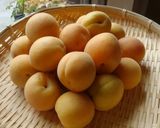
Carefully wash the apricots and dry well with a paper towel. Remove the stem with a toothpick.
- 3
Wipe the apricots from Step 2 with a vodka-soaked paper towel. (This is to prevent mold from forming)
- 4
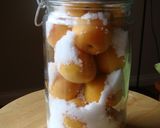
Add Steps 1 and 3 alternatively to a sterilized bottle. (Sterilize the bottle by boiling and wiping with vodka.) Store as-is for a month in your pantry.
- 5
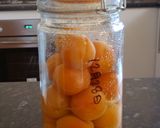
During storage water will form so shake the bottle about one a day to spread the liquid. The picture shows two days after making. The volume has decreased.
- 6
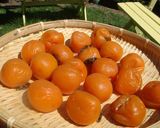
When they are well-pickled, put them outside to dry them out. On the first day they will be prone to sticking to the net so turn them over soon.
- 7
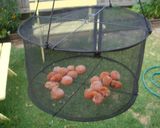
If you put the pickled apricots back into Step 5's bottle on the first evening after leaving them out, they will become soft, but if they have already softened you don't have to worry. You can take them inside.
- 8
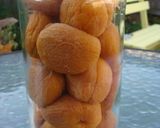
They will be done on the 2nd or 3rd day of drying out. Try not to get them wet with rain or other moisture. The picture of the basket in Step 6 or 9's bottle is fine. The salt will spread gradually.
- 9
- 10
I promptly used some in an onigiri rice ball. The color was slightly yellow but the flavor was like a tart, salty umeboshi pickled plum. They turned out well and mold-free.
- 11
If you have red shiso, prime them by rubbing with salt to remove bitterness and add them to Step 5 when the liquid starts to form. The shiso-addition gave me a good result.
Cooksnaps

Did you know that you can import recipes from anywhere into Cookpad with one click?
https://blog.cookpad.com/us/cookpad-recipe-import-feature-save-recipes-from-anywhere/
Download Cookpad app to plan your meals and store your cooking ideas in one safe place! https://cookpad.wasmer.app/us/download
Keywords
Similar Recipes
More Recipes
-

-
Kothimbir Vadi (tea time snack)

-


-

-

-

-


-
Dahi Chicken Kabab with a Yogurt Mint Coriander Dip

-

-

-
-


-

-
Shin's Vegetable Salad Hot Pot

-
-


-
Foolproof Smooth and Flawless Boiled Eggs
-
Chocolate Cream & Cocoa Swiss Rolls
-
Brown Sugar Cafe Au Lait Rolls
-

Indian Home-style Curry with Potatoes and Chickpeas
-
Fluffy and Springy White Bread Made Easily in a Bowl
-

Chewy Rice Flour Olive Focaccia
-





Comments (2)