

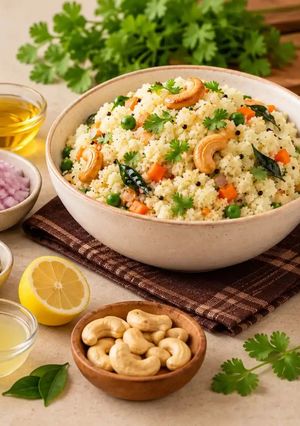
How to Make Rava Upma Step by Step

Making soft, fluffy and non-sticky rava upma does not require complicated techniques. The key is to choose suitable rava, roast it appropriately, measure the water carefully and add the grains gradually while stirring.
Once you understand how your chosen rava absorbs water, it becomes easier to prepare upma with a consistent texture every time.
How to Make Rava Upma Step by Step
Making soft, fluffy and non-sticky rava upma does not require complicated techniques. The key is to choose suitable rava, roast it appropriately, measure the water carefully and add the grains gradually while stirring.
Once you understand how your chosen rava absorbs water, it becomes easier to prepare upma with a consistent texture every time.
 Open in Cookpad App
Steps
- 1
Heat a heavy-bottomed pan over low to medium-low heat. Add the rava and roast it for a few minutes, stirring continuously.
The rava should smell lightly nutty and remain loose rather than forming clumps. Avoid browning or burning it.
- 2
Heat the oil or ghee in the same pan. Add the mustard seeds and allow them to splutter.
Add the urad dal and chana dal and fry until lightly golden. If you prefer a richer flavour, add cashews and roast them until golden.
Add the curry leaves and stir briefly.
- 3
Add the chopped ginger and green chillies, followed by the onion.
Saute until the onion becomes soft and translucent. There is no need to brown it deeply.
If you are preparing vegetable upma, add finely chopped carrots, beans or peas at this stage and cook until they begin to soften.
- 4
Pour the measured water into the pan and add salt to taste. Bring the mixture to a rolling boil.
For the first attempt, start with approximately 2 cups of water per cup of medium-grain rava. You can adjust the quantity depending on the grain size and the consistency you prefer.
- 5
Reduce the flame to low. Slowly sprinkle the roasted rava into the boiling water while stirring continuously with a spoon or spatula.
Avoid adding the entire quantity in one heap. Gradual addition helps distribute the rava evenly through the water and reduces the chance of lumps forming.
- 6
Continue stirring until the rava absorbs most of the water and the mixture begins to thicken.
Reduce the flame and cover the pan with a lid. Allow the upma to cook for a few minutes, checking that the grains become tender.
The exact cooking time depends on the rava and the pan. If the mixture looks dry before the grains are cooked, add a little hot water and continue cooking.
- 7
Once the rava is fully cooked, switch off the stove and leave the pan covered for 3–5 minutes.
Add the chopped coriander leaves and a squeeze of lemon juice. Gently fluff the upma with a fork or spoon before serving.
Serve hot with coconut chutney, sambar or your favourite accompaniment.
Made this recipe? Share a Cooksnap!
Let Anilfoods know how it turned out.
Nothing says thank you like a photo!

Someone made your recipe and shared a Cooksnap!

Keywords
Similar Recipes
More Recipes
-


-


-
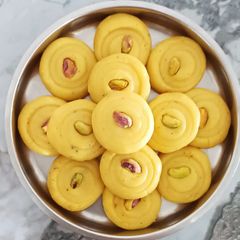
Cashew Paneer Sondesh -“Maa Durga’s Sweet Blessings
-

-

-

-

Brad's grilled cheese, venison quesadillas

-


-

-
Brad's grilled cheese, venison quesadillas
-

-

-
Wholesome & Soothing Vrat Special Sama Khichadi

-

-

Daikon / Radish fritters in Japanese style

-


-




Comments