

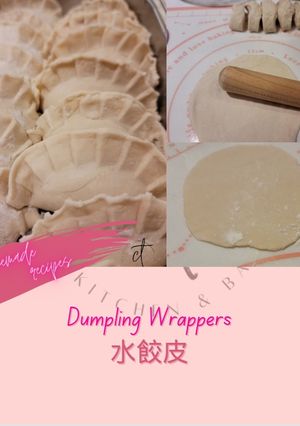
Dumplings Wrappers (Pan-fly/Deep-fly Version) 餃子皮 (煎/炸版)

Try to avoid shopping out when the epidemic is severe, but wanna eat dumplings. . . Just do it yourself! Homemade dumpling wrapper is firmer with a chewy touch. Additive-free is much safer and healthier (Change water to different colors of vegetables/fruits juice, it will become a rainbow dumpling 🌈).
盡量避免在疫情嚴峻的時候外出購物,但又想吃餃子。 . . 自己做吧! 自製的餃子皮更結實,有嚼勁。 無添加劑更安全、更健康 (把水換成不同顏色的蔬菜/果汁,它會變成彩虹餃子🌈)。
Dumplings Wrappers (Pan-fly/Deep-fly Version) 餃子皮 (煎/炸版)
Try to avoid shopping out when the epidemic is severe, but wanna eat dumplings. . . Just do it yourself! Homemade dumpling wrapper is firmer with a chewy touch. Additive-free is much safer and healthier (Change water to different colors of vegetables/fruits juice, it will become a rainbow dumpling 🌈).
盡量避免在疫情嚴峻的時候外出購物,但又想吃餃子。 . . 自己做吧! 自製的餃子皮更結實,有嚼勁。 無添加劑更安全、更健康 (把水換成不同顏色的蔬菜/果汁,它會變成彩虹餃子🌈)。
 Open in Cookpad App
Steps
- 1
For a homemade dumpling wrapper, the ratio of flour and water is usually at 2:1 (depending on the type of flour, will have 1 or 2 tbsp's different).
The following is a brief introduction to the different cooking methods of dumplings and the difference in the moisture content of the dumpling wrappers so that you can make dumplings with different flavors. (I made "hot dough" this time*¹)
自製餃子皮,麵粉及水的比例通常為 2:1(取決於麵粉的類型,或有1至2湯匙的分別)。
以下簡介一下不同烹調方式的餃子,製造水餃皮時其水份的分別,這樣大家就可以做出不同口味的餃子了。(我這次做的是"燙麵團"*¹)
- 2
¹ To make pan-/deep-fry dumplings, "hot dough" is used, which is made with hot water and room temperature water, and the ratio is generally 2:1. Dumpling wrappers from "hot dough" are a bit less chewy touch but softer.
*¹ 做煎/炸餃子,用的是"燙麵團",即以熱水及室溫水製作,比例一般是2:1。"燙麵團"做出來的餃子皮彈性較少但較柔軟。
- 3
² To make soup dumplings, "cold-water dough" is used, that is, the water is changed to cold water. The dumpling wrappers made of "cold-water dough", the texture is chewier, fastness to boil, and not easy to break when boiled with the soup.
*² 做湯餃子,用的是"冷水麵團",即把水份全改成冷水製作。"冷水麵團"做的餃子皮更有彈性、亦較耐煮,與湯一起煮的時候不易破。
- 4
³ To make steamed dumplings, "full-scalding dough" is used, (that is, the water is changed to hot water. "Fully-scalding dough" changes the gluten and toughness of all flour, so even if it is not idle and relaxed the dough is not easy to shrink when rolled out. And it will not become hard after being steamed and cooled.
*³ 做蒸餃子,用的是"全燙麵團",(即把水份全改成熱水製作。"全燙麵團"把所有麵粉的筋性及韌性都改變,所以即使不作閒置鬆弛,擀開的 麵皮也不易回縮,蒸熟後放涼也不會變硬。
- 5
⁴ The dumpling wrappers I made this time are for the number of dumplings made at night, so no salt is added. If you plan to make a large amount or use it as a backup, it is recommended to add a little salt for preservation. Wrap the unused dumpling wrappers in plastic wrap, put them in a crisper, and put them in the refrigerator for about a week.
*⁴ 我這次做的水餃皮是即晚做餃子的份量,所以沒有加鹽,如果預計做的份量較多或作備用的話,還是建議加少許鹽作保存。將未用完的水餃皮用保鮮膜包好,放入保鮮盒後放進冰箱,可保存約一星期。
- 6
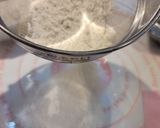
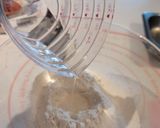
Sift the flour, pour in hot water and mix (if making soup dumplings, change to the same amount of cold water).
麵粉過篩,倒入熱水拌混(如做湯餃子則改成同等份量冷水)。
- 7
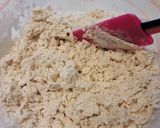
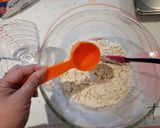
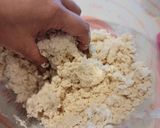
Add the remaining water to the dough with a tablespoon. For each 1 tablespoon of water added, knead the dough with your hands to fully absorb all the water.
以湯匙把剩餘水份續少加入麵團中。每加入1湯匙水,用手搓揉麵團,讓其充分吸收所有水份。
- 8
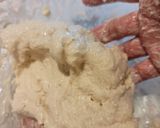
Until all the dough in the bowl is completely absorbed, smooth, and free from sticking to your hands.
直至碗內所有麵團完全吸收、平滑及不沾手為止。
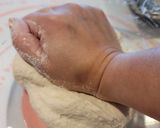
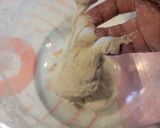
- 9
Slightly round the dough, put it in a greased pan, cover with plastic wrap and let it rest for 30 minutes to wake up (Leaving the dough or resting the dough is a step to allow the inside of the dough to relax and homogenize. This will help the dough not to shrink back when rolling out, it will be easier to shape, and the taste will be better after cooking).
把麵團略為搓圓,放在已掃油的盤內,蓋上保鮮膜閒置30分鐘作醒麵 (閒置麵團或醒麵是為了讓麵團內部鬆弛及均質化的步驟。此舉可助以後擀麵皮時不易回縮,更容易塑形,煮熟後口感也更佳)。
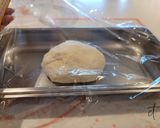
- 10
Roll the dough into strips or poke a hole in the middle of the round dough and roll it out into a doughnut shape (the dough made by this method has no ends, so it is more even), and then equally cut into 10 grams of small dough (initially tried 20 grams per serving, but I still felt that the rolled dough was too thick 😅).
把麵團搓成條狀或在圓麵團中間刺一個洞再搓開成甜甜圈狀 (這個做法做的麵團沒有頭尾,所以比較平均),再均等切成10克一份的小麵團 (最初嘗試20克一份但結果還是覺得擀出來的麵皮太厚了😅)。
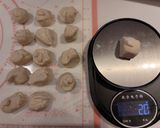
- 11
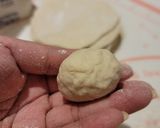
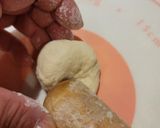
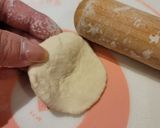
Round the small dough, control the angle of the dough with one hand, and use a rolling pin with the other hand to roll out the periphery of the dough, and then rotate the dough to roll until the whole dough is rolled even (if you find that the wrapper shrinks seriously during rolling, just cover it with plastic wrap and let it sit for a while).
把小麵團搓圓,一隻手控制麵團角度,另一隻手用擀麵杖擀麵團的外圍,擀開後再旋轉麵團來擀,直至擀平整個麵團為止 (如果發現擀的時候,麵皮回縮嚴重,就蓋回保鮮膜再閒置一下)。
- 12
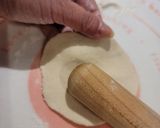
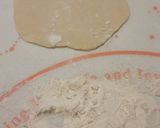
Sprinkle cornflour on the rolled dough, it can be stacked and stored, and the overlapping doughs will not stick together (the reason for using cornflour is that its density is different from the flour of the dough, so it will not be absorbed by the dough). Now you can make your dumplings!
在擀好的麵皮上灑上粟粉,就可以重疊起來儲存,而重疊的麵皮也不會黏在一起 (用粟粉的原因是其密度與麵粉不同,所以不會被麵皮所吸收)。現在就可以做自己的餃子了!
- 13
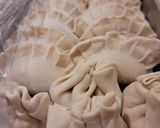
Postscript: The child just likes not to follow the routine. This can be understood by looking at the dumplings he makes 😅
後記: 孩子就是喜歡不走常規,這點一看他包的餃子就能明白😅
- 14
Seeing this, I am thinking... Next time I make dumpling wrappers, I can roll out the outer edge a little thinner, and the middle part that wraps the filling is a little thicker. Doing this should make the dumplings more complete.
You may also share the interesting things that happened when you made dumplings with your children🤗
有見及此,我在想……下次再做餃子皮的時候,可以把外圍邊沿部分擀薄一點,而中間包裹餡料的部分稍為厚一點點。這樣做的話應該可以令餃子更完滿。
大家不妨也分享一下妳跟孩子包餃子時發生的趣事🤗
Cooksnaps

Similar Recipes
More Recipes
-
Ranga Aloor Puran Puli(Sweet Potato Stuffed Puli Paratha)

-

-

-

-

-

-
Slow Cooker Goat Curry (myheartbeets.com)

-

-

-
 Lali
Lali -
 Lali
Lali -
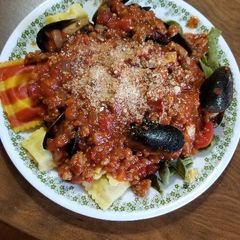
Spinach Fettuccine with Lobster Ravioli, Mussels, & Meat Sauce

-

-

-


-

-
-

-

-

-






Comments