

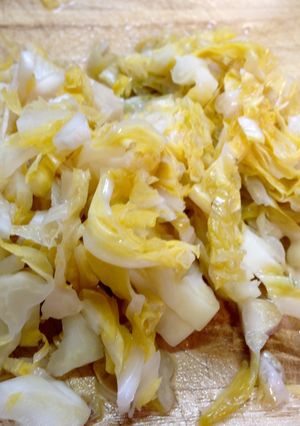
Homemade Sauerkraut (Brine method for whole, half or quartered cabbage)

In some parts of Germany and especially in Eastern Europe, you can find sauerkraut made by fermenting whole or halved (or even quartered) cabbages. With the shredded cabbage sauerkraut, you just need salt because it's easy to pull out the water from shredded cabbage. But with whole/half cabbages, you need to ferment it in a salt brine solution. I like this method because it's saves all the chopping! The down side is that you need more salt for preparing the brine.
Note to calculate the exact amount of water and salt you need for a certain cabbage, I always use this "formula" (you need to be able to weigh the cabbage though).
For each medium cabbage, you'll need about 80-100 g salt and 2 liters of water to make a 4-5% salt brine solution. Or, I use this "formula" below to calculate how much water and salt I need:
1. First weigh the cabbage. Then:
2. Calculate the water by multiplying the weigh of cabbage x 2.6
3. Calculate the salt by multiplying the amount of water by 0.05 (= 5%).
Homemade Sauerkraut (Brine method for whole, half or quartered cabbage)
In some parts of Germany and especially in Eastern Europe, you can find sauerkraut made by fermenting whole or halved (or even quartered) cabbages. With the shredded cabbage sauerkraut, you just need salt because it's easy to pull out the water from shredded cabbage. But with whole/half cabbages, you need to ferment it in a salt brine solution. I like this method because it's saves all the chopping! The down side is that you need more salt for preparing the brine.
Note to calculate the exact amount of water and salt you need for a certain cabbage, I always use this "formula" (you need to be able to weigh the cabbage though).
For each medium cabbage, you'll need about 80-100 g salt and 2 liters of water to make a 4-5% salt brine solution. Or, I use this "formula" below to calculate how much water and salt I need:
1. First weigh the cabbage. Then:
2. Calculate the water by multiplying the weigh of cabbage x 2.6
3. Calculate the salt by multiplying the amount of water by 0.05 (= 5%).
 Open in Cookpad App
Steps
- 1
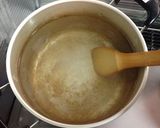
Dissolve salt in hot water until no more grains are visible. Let cool completely.
- 2
I usually cut my cabbage in half or in quarters. This cabbage here is a called "filderkraut" or "spitzkohl" because of its shape. Apparently it's good for sauerkraut, heh. Anyway you can use whatever kind of cabbage you want.

- 3
Put whole or halved cabbage into a bucket or ceramic crock. Pour in the the cooled salt brine solution.

- 4
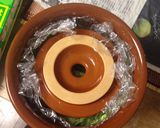
The cabbage needs to be completely submerged under the water, so you need to weigh it down with something. I usually lay some plastic wrap over the top of the cabbage and then put a plate top.

- 5
On top of that I put a heavy weigh like a jug of water, etc. (make sure the plate and the weight are washed and clean). Here I'm using a special ceramic weight for fermenting vegetables. Cover with a lid or cloth to keep things out of the container.
- 6
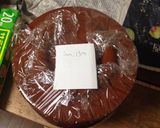
Now just wait for the fermentation to happen! You'll probably start seeing bubbles after a couple days. Check the sauerkraut every day or two and skim off the bubbles. Make sure you label the date on your sauerkraut so you know how long it's been fermenting!
- 7
The time you need to ferment depends on how warm or cold it is, as well as your taste preference. For me, in the winter I usually give the sauerkraut at least 4 weeks up to 6 weeks. In spring/autumn, maybe around 2-3 weeks. Summer could be 1-2 weeks, but if it's VERY hot, the sauerkraut won't taste that great, so I'd avoid hot weather.
- 8
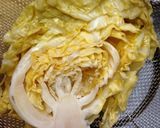
You can test by taking out the cabbage. It should have become somewhat softened and yellowish in color. It's okay to cut the whole cabbage open and check/taste the center. If you want it to ferment longer, just return it to the crock and let it go for another few days or longer.
- 9
You can also start eating it "young" and keep fermenting the rest for longer so you can enjoy different stages of maturity. Just take some out and cut it up and return the rest of the chunk. If you don't want it to ferment anymore, then move the sauerkraut to the refrigerator.

- 10
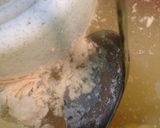
NOTE 1: The water will start to become cloudy/white-ish after several days or a week or two if it's cold. It's very likely you can get some white wrinkly, filmy looking mold developing at the surface of the water which is OKAY! You do not need to throw away the sauerkraut. Just continue to skim off as much as you can every day. Under the water the sauerkraut bacteria are creating an acidic, sour environment that prevents any "bad" bacteria and mold from surviving.
- 11
NOTE 2: The sauerkraut will probably be smelly. That's OKAY too! It's just product of the fermentation process. Whenever I open the lid to check my sauerkraut, I open a window or turn on the ventilation fan :P
Cooksnaps

Similar Recipes
More Recipes
-


-


-


-


-
-

-

Wombok, Tofu Ball & Harusame Soup
-

Simmered Wombok & Asian Mushrooms
-

Green Beans and Potatoes with Cream Cheese Sauce

-


-


-


-

Banana Oatmeal Bread with Pancake Mix

-

-

-


-
Banana Oatmeal Bread with Pancake Mix
-
-

Whole wheat Cornbread Cottage Pie

-
-

Gazpacho with chilli and herbs
 Keith Vigon
 -
Chicken salad with sesame and coriander dressing
Keith Vigon -
Potted salmon with lemon and Dill
Keith Vigon -
Salmon and ginger pie, with lemon thyme and lime
Keith Vigon


Comments (7)