Authentic home cooking from Vietnam, with US measurements.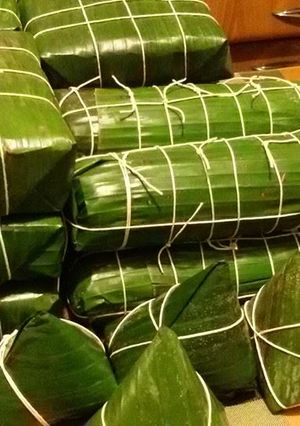
Bánh chưng, bánh tét

Living far from home, every time Lunar New Year comes around, I feel a deep longing. Songs welcoming spring and news from home preparing for the holiday make me nostalgic... I miss it so much, but the traditional New Year quietly passes by. I try to remember the days when I was young, making bánh chưng and bánh tét with my great-grandmother and grandparents, and now I make them myself. Even after eight years away, I’ve never had a New Year without these traditional cakes. My family has a wood-burning fireplace, so when cooking the cakes, the aroma of burning wood, the crackling sounds, the boiling water, and the scent of banana leaves bring back so many memories... I want to keep this tradition alive so my husband and son can know how beautiful Vietnamese New Year is, and what a wonderful childhood it was.
Bánh chưng, bánh tét
Living far from home, every time Lunar New Year comes around, I feel a deep longing. Songs welcoming spring and news from home preparing for the holiday make me nostalgic... I miss it so much, but the traditional New Year quietly passes by. I try to remember the days when I was young, making bánh chưng and bánh tét with my great-grandmother and grandparents, and now I make them myself. Even after eight years away, I’ve never had a New Year without these traditional cakes. My family has a wood-burning fireplace, so when cooking the cakes, the aroma of burning wood, the crackling sounds, the boiling water, and the scent of banana leaves bring back so many memories... I want to keep this tradition alive so my husband and son can know how beautiful Vietnamese New Year is, and what a wonderful childhood it was.
 Open in Cookpad App
Steps
- 1
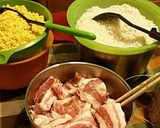
Choose sticky rice with plump, even grains. Rinse thoroughly and soak for at least 8 hours. After soaking the rice for 4 hours, rinse the mung beans and soak them for 4 hours. After 8 hours, drain both the rice and beans. Mix 1 tablespoon salt into the rice. Steam the mung beans with 1 tablespoon salt and black pepper, then mash until smooth. I prefer to use unsteamed mung beans for a tastier filling, mixing salt and pepper directly into the beans. Remove the skin from the pork belly and cut into pieces about 1/2 inch thick and 2–3 inches long, depending on your mold size. Marinate with salt, chopped shallots, sugar, and seasoning powder. Marinate at the same time as soaking the rice and refrigerate overnight.
- 2
Trim the tough ends off the banana leaves. Cut the leaves into wide strips twice the length of your mold’s side, and use pieces as wide as the mold’s side. Blanch the leaves briefly in boiling water, then wipe clean. Blanching helps prevent the leaves from breaking or tearing when wrapping. Soak the string or twine in water to make it more flexible. Save any leftover banana leaf scraps to use during cooking.
- 3
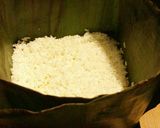
Lay two pieces of string in a cross shape and place the mold on top. Fold a banana leaf in half lengthwise, open it, then fold it in half widthwise. Place the corner folded widthwise at the bottom of the mold so the lengthwise fold lines up with the mold’s corner. Repeat with another leaf for the opposite corner. Place a smaller banana leaf on top. Add a bowl of sticky rice.
- 4
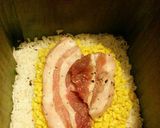
If using steamed mung beans, take a handful, flatten it, and place pork on top, then cover with another piece of mung bean. Add another bowl of sticky rice on top. Cover with a piece of banana leaf. Fold the remaining corners of the leaves over, hold the cake in place, and remove the mold. Tie the cake with the prepared string to hold its shape.
- 5
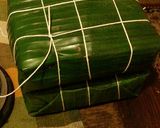
Take a large banana leaf, place the cake in the center, and wrap it like a gift. Tie with string. If using thread, don’t tie too tightly, as the cake will expand while cooking. If using twine, tie firmly to prevent it from coming loose during cooking.
- 6
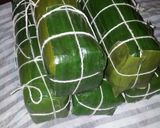
Line the bottom of a large pot with banana leaf scraps, then arrange the cakes on top, leaving some space between them so they cook evenly. Don’t overcrowd the pot. Cover the cakes with more banana leaves and pour in boiling water to cover the cakes completely. Cook for about 10 hours, adding more water as needed to keep the cakes submerged. When done, turn off the heat and let the cakes sit in the pot for another hour. Remove the cakes, place them on a tray, cover with a wooden board, and weigh them down for about 2 hours to press out excess water from the banana leaves. This helps the cakes keep longer.
- 7
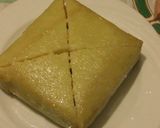
The cakes will have a beautiful green color from the banana leaves.

Keywords
Similar Recipes
More Recipes
-

-


-

-

Fluffy Lemon & Blueberry Pancakes

-

-

-

Spicy Pork and Mediterranean Vegetables Pasta
-

-

-
Vegetable Peel Fritters / Pakoras

-

-

-

-

-
-

-


-


-
 Nicole Nelson
 -