Authentic home cooking from Japan, with US measurements.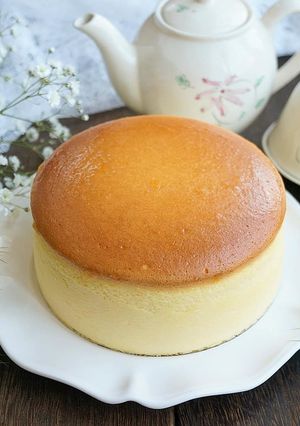
Perfect Japanese Soufflé Cheesecake (No Cracks!)

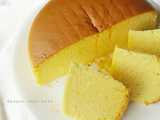
There's a special baking technique for this! Try making it just as written with these proportions for the best results—no cracks, a beautiful golden color, and an incredible taste and texture!
Recipe background:
I wanted to overcome my struggles with soufflé cheesecake! After learning how to bake it slowly at a low temperature, I experimented with my favorite recipe to see if I could get a perfectly golden, crack-free finish. I used a stone oven dome for this method and have never had it crack! I hope this helps you too!
Perfect Japanese Soufflé Cheesecake (No Cracks!)
There's a special baking technique for this! Try making it just as written with these proportions for the best results—no cracks, a beautiful golden color, and an incredible taste and texture!
Recipe background:
I wanted to overcome my struggles with soufflé cheesecake! After learning how to bake it slowly at a low temperature, I experimented with my favorite recipe to see if I could get a perfectly golden, crack-free finish. I used a stone oven dome for this method and have never had it crack! I hope this helps you too!
 Open in Cookpad App
Steps
- 1
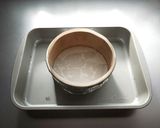
Prepare the parchment paper. Cut reusable parchment so it stands 1/2 inch (1 cm) higher than the sides of your pan (any higher and the cake won't brown properly).
- 2
For the bottom, any parchment paper is fine! Use butter to stick it to the pan (be sure to use butter), and wrap the bottom of the pan with aluminum foil for the water bath.
- 3
Place the prepared pan on a baking sheet as shown in step 1.
- 4
Soften the cream cheese. Place it in a microwave-safe bowl and heat at 200W for about 4 minutes. Sift the cake flour as well.
- 5
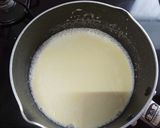
In a small saucepan, combine the heavy cream and butter. Heat over medium until just before boiling, then remove from heat.
- 6
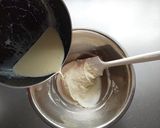
In a separate bowl, mix the softened cream cheese and sifted cake flour with a spatula. Add the hot cream mixture from step 5 and whisk until smooth.
- 7
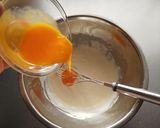
Once smooth, add the egg yolks a little at a time, whisking after each addition. Add the lemon juice and mix well.
- 8
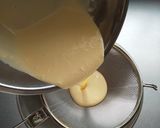
Strain the batter through a fine mesh sieve to remove any lumps and make it extra smooth.
- 9
Make the meringue. (Preheat the oven to 210°F/100°C now.) Prepare hot water for the water bath. Add all the sugar to the egg whites and beat until foamy.
- 10
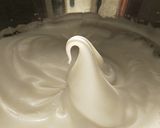
Whip the meringue until it is glossy and forms soft peaks that slightly droop at the tips. (Be careful not to overbeat!)
- 11
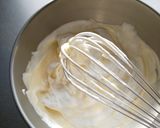
Add 1/3 of the meringue to the cheese batter and whisk well to combine. Add the rest of the meringue and gently fold in with a whisk, scooping from the bottom.
- 12
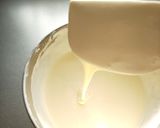
When there are no more visible egg white lumps, switch to a spatula and fold until the batter is smooth and streak-free.
- 13
Pour the batter into the prepared pan on the baking sheet. Use a skewer to swirl through the batter to remove air bubbles, then smooth the surface with a spatula.
- 14
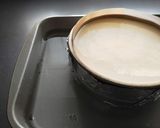
Pour 104°F (40°C) hot water into the baking sheet until it reaches about 3/4 inch (2 cm) up the sides of the pan.
- 15
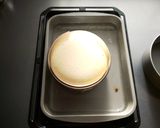
Place the pan in the preheated 210°F (100°C) oven and bake for 60 minutes. Remove the whole baking sheet from the oven (it's placed on a separate baking sheet).
- 16
Carefully place the cake pan (with the baked cake) into the prepared 7-inch (18cm) round cake pan for extra insulation (using oven mitts is helpful), then place it on the prepared baking sheet.
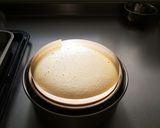
- 17
Flip the oven baking sheet upside down and set the cake (in the pan) on top. (You will now have two baking sheets stacked.)
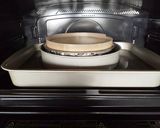
- 18
Increase the oven temperature to 390°F (200°C) and bake for 15 minutes. In the last 5 minutes, rotate the pan to ensure even browning.
- 19
(Note) When increasing the oven temperature to 390°F (200°C), do not preheat again. Adjust browning time as needed for your oven.
- 20
When the cake is perfectly golden, turn off the oven and leave the cake inside for 20–30 minutes (removing it immediately can cause wrinkles).
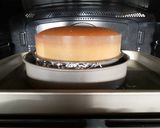
- 21
Remove the baking sheet from the oven, take the cake out of the pan (leave the bottom plate attached), place it on a plate, peel off the parchment from the sides, and let it cool to room temperature.
- 22
Once cooled, refrigerate for at least 5–6 hours to let the flavors develop! This cake is meant to be eaten chilled—if you eat it warm, the flavor will be muted!
- 23
Remove from the fridge, place a new piece of parchment on a plate, invert the cake onto it, remove the bottom plate and parchment, then flip the cake right side up onto a serving plate.
- 24
Finally, warm a little apricot jam with a splash of water in a small saucepan and brush it over the top of the cake.
- 25
When you cut into it, you'll hear a soft fizz and enjoy a melt-in-your-mouth, heavenly soufflé cheesecake!
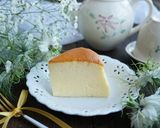
Cooksnaps

People also looked for
Keywords
Similar Recipes
More Recipes
-
Gooey Chocolate Chip Skillet Cookie

-

-

-

-


-

-

-
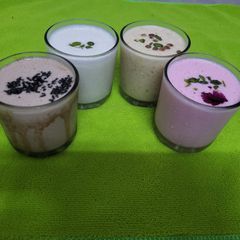
Four Flavoured Lassi (No Sugar)

-


-

-
 Jeremy Keller
 -


-


-


-

Banyard millet pulao with pink raita

-

Cabbage paratha Pattagobi paratha

-


-


-

-

-

Stewed vegetable curry with rice