

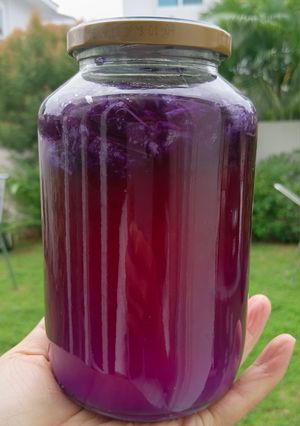
น้ำส้มสายชูหมักดอกอัญชัน / Homemade Butterfly Pea Flower Vinegar

ถ้าใครที่บ้านปลูกดอกอัญชัน น่าจะเข้าใจกันดีค่ะว่า หน้าฝนแบบนี้คือช่วงเวลาทองของอัญชันเลย เพราะน้องจะออกดอกให้เก็บแทบทุกวัน เก็บเท่าไหร่ก็เหมือนไม่หมด บางวันบานจนเก็บไม่หวาดไม่ไหวเลยทีเดียว
สำหรับคนไทย ดอกอัญชันเป็นดอกไม้ที่เราคุ้นเคยกันดีอยู่แล้ว ทั้งเอามาทำขนม เครื่องดื่ม ข้าว หรือใช้เป็นสีธรรมชาติ นอกจากสีสวย ๆ แล้ว อัญชันยังมีสารสีธรรมชาติกลุ่ม แอนโทไซยานิน (Anthocyanins) ซึ่งมีคุณสมบัติในการต้านอนุมูลอิสระด้วยค่ะ
พอมีอัญชันเยอะขนาดนี้ ก็เลยคิดว่าแทนที่จะปล่อยให้ดอกร่วงไปเฉย ๆ ลองเอามาทำเป็น น้ำส้มสายชูหมักดอกอัญชัน กันดีกว่า ได้ใช้ดอกไม้จากสวนให้คุ้ม แถมยังได้น้ำส้มสายชูสีสวยจากธรรมชาติไว้ใช้ในครัวอีกด้วย
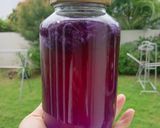
และที่สนุกคือ เมื่ออัญชันเจอกับความเป็นกรด สีฟ้า–ม่วงของเขาจะค่อย ๆ เปลี่ยนเป็น ม่วงอมชมพู สวยแบบไม่ต้องเติมสีเลยค่ะ
If you grow butterfly pea at home, you’ll know that the rainy season is when it really thrives—flowers everywhere, almost every day!
Butterfly pea is a familiar ingredient in Thai cooking and is naturally rich in anthocyanins, the pigments behind its beautiful blue-purple color.
So instead of letting all those flowers go to waste, I decided to turn them into homemade Butterfly Pea Vinegar—a simple way to enjoy the harvest and bring a beautiful natural color into the kitchen.
น้ำส้มสายชูหมักดอกอัญชัน / Homemade Butterfly Pea Flower Vinegar
ถ้าใครที่บ้านปลูกดอกอัญชัน น่าจะเข้าใจกันดีค่ะว่า หน้าฝนแบบนี้คือช่วงเวลาทองของอัญชันเลย เพราะน้องจะออกดอกให้เก็บแทบทุกวัน เก็บเท่าไหร่ก็เหมือนไม่หมด บางวันบานจนเก็บไม่หวาดไม่ไหวเลยทีเดียว
สำหรับคนไทย ดอกอัญชันเป็นดอกไม้ที่เราคุ้นเคยกันดีอยู่แล้ว ทั้งเอามาทำขนม เครื่องดื่ม ข้าว หรือใช้เป็นสีธรรมชาติ นอกจากสีสวย ๆ แล้ว อัญชันยังมีสารสีธรรมชาติกลุ่ม แอนโทไซยานิน (Anthocyanins) ซึ่งมีคุณสมบัติในการต้านอนุมูลอิสระด้วยค่ะ
พอมีอัญชันเยอะขนาดนี้ ก็เลยคิดว่าแทนที่จะปล่อยให้ดอกร่วงไปเฉย ๆ ลองเอามาทำเป็น น้ำส้มสายชูหมักดอกอัญชัน กันดีกว่า ได้ใช้ดอกไม้จากสวนให้คุ้ม แถมยังได้น้ำส้มสายชูสีสวยจากธรรมชาติไว้ใช้ในครัวอีกด้วย
และที่สนุกคือ เมื่ออัญชันเจอกับความเป็นกรด สีฟ้า–ม่วงของเขาจะค่อย ๆ เปลี่ยนเป็น ม่วงอมชมพู สวยแบบไม่ต้องเติมสีเลยค่ะ
If you grow butterfly pea at home, you’ll know that the rainy season is when it really thrives—flowers everywhere, almost every day!
Butterfly pea is a familiar ingredient in Thai cooking and is naturally rich in anthocyanins, the pigments behind its beautiful blue-purple color.
So instead of letting all those flowers go to waste, I decided to turn them into homemade Butterfly Pea Vinegar—a simple way to enjoy the harvest and bring a beautiful natural color into the kitchen.
 เปิดในแอป Cookpad
วิธีทำ
- 1
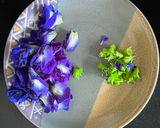
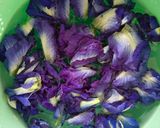
เด็ดขั้วสีเขียวออก เพราะอาจทำให้น้ำส้มสายชูมีรสขมได้ จากนั้นล้างดอกอัญชันให้สะอาด แล้วขยี้หรือบีบเบา ๆ ให้กลีบช้ำเล็กน้อย เพื่อช่วยให้สีและสารจากดอกอัญชันออกมาได้ง่ายขึ้น
Remove the green stems, as they may add a bitter taste. Wash the flowers thoroughly, then gently crush or squeeze the petals to help release their natural color and compounds.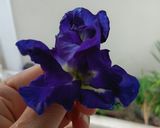
- 2
ละลายน้ำตาล
ใส่น้ำสะอาด 500 มล. ลงในภาชนะสะอาด เติมน้ำตาลทราย 4 ช้อนโต๊ะ คนจนละลาย
Pour 500 ml of clean water into a clean container. Add 4 tablespoons of granulated sugar and stir until completely dissolved.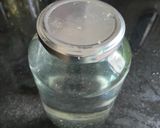
- 3
ใส่ดอกอัญชันที่เตรียมไว้ลงในน้ำหวาน Add the butterfly pea flowers.
ปิดภาชนะด้วยฝาที่ไม่แน่นจนเกินไป เพื่อให้อากาศสามารถถ่ายเทได้ และวางไว้ในบริเวณที่สะอาด อุณหภูมิห้อง และไม่โดนแสงแดด
Cover the container loosely so that some air exchange can occur. Keep it in a clean, room-temperature location away from direct sunlight.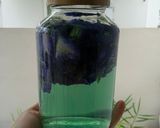
- 4
ดูแลระหว่างการหมัก
คนหรือหมุนภาชนะเบา ๆ วันละครั้ง และสังเกตกลิ่น สี และลักษณะของน้ำตลอดกระบวนการ During fermentation,gently stir or swirl the container once a day. Observe the smell, color, and appearance of the liquid throughout the fermentation process.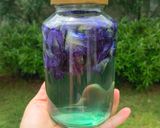
- 5
รอให้เกิดกระบวนการหมัก
กระบวนการเปลี่ยนน้ำตาล → แอลกอฮอล์ → กรดอะซิติก ต้องใช้เวลา โดยระยะเวลาจริงอาจแตกต่างกันตามอุณหภูมิ จุลินทรีย์ และสภาพแวดล้อม จะมาอัพเดทรูปภาพให้แต่ละช่วงเวลานะคะ Allow fermentation to develop
The conversion of sugar → alcohol → acetic acid takes time. The actual fermentation period can vary depending on temperature, microorganisms, and environmental conditions. I will update more photos along the ferment process. - 6
ครบ 3 เดือน กรอง ตรวจสอบก่อนนำมารับประทาน
หากต้องการความปลอดภัยและความสม่ำเสมอในการผลิต ควรตรวจวัดค่า pH และความเป็นกรดของน้ำส้มสายชู ไม่ควรใช้เพียงระยะเวลาในการหมัก สี หรือกลิ่น เป็นตัวตัดสินว่าน้ำส้มสายชูพร้อมรับประทาน
After 3 months, filter and check before consumption
For safety and consistency, measure the pH and acidity of the finished vinegar rather than relying only on fermentation time, color, or smell to determine whether it is ready for consumption.
เคล็ดลับ
หลักง่าย ๆ สำหรับการหมักที่ใช้น้ำตาลเป็นแหล่งอาหาร คือใช้น้ำตาลประมาณ 8–10% ของน้ำโดยน้ำหนัก หรือจำง่าย ๆ ว่า น้ำ 100 ส่วน : น้ำตาล 8–10 ส่วน
อัตราส่วนนี้สามารถใช้เป็น จุดเริ่มต้น เมื่อต้องการทดลองหมักวัตถุดิบอื่น ๆ ได้
For a simple fermentation, a useful starting point is around 8–10% sugar by weight — roughly 100 parts water to 8–10 parts sugar. This ratio can also be used as a starting point when experimenting with other ingredients. Enjoy!

คำสำคัญ
สูตรอาหารที่คล้ายกัน
สูตรเพิ่มเติม

ความคิดเห็น