


 Open in Cookpad App
Steps
- 1
Heat ⅓ cup ghee in a kadai or a thick bottomed pan. Keep the heat to a low or medium-low. Use a heavy pan or else there is a risk of the suji getting burnt.
When the ghee is getting heated, at the same time keep sugar and water to boil in a pan on a different burner. Steps are mentioned below under the heading “Making sugar solution for halwa“.
- 2
Add ½ cup sooji (rava or semolina). Use a fine variety of sooji and not the coarser variety
- 3
Mix very well and start roasting the sooji
- 4
Keep on stirring the sooji so that the grains do not stick to the pan and are roasted evenly.
- 5
Roast sooji till you can see the ghee getting separated and when you see the cashews getting golden. The color of the suji or rava should not become brown. There will also be a fragrant aroma of suji and ghee in your kitchen.
- 6
Roasting suji takes approx 7 to 8 minutes on a low heat. This step is important because if sooji is not roasted well then you will not get the perfect texture in the halwa. There will be a slight raw taste in the halwa.
- 7
When the suji is fried well, then add 1 teaspoon chironji (optional), 2 tablespoons golden raisins (kishmish) and a pinch of edible camphor (optional).
- 8
Next add ½ teaspoon cardamom powder (4 to 5 green cardamoms, powdered in a mortar-pestle, husks discarded).
- 9
Mix well.. When you keep the sooji for roasting in the ghee, at the same time, take ⅓ cup sugar in another pan or saucepan
- 10
Here I have used raw sugar and hence the color of the water is not transparent but a light brown. I always use unrefined raw sugar in almost all of my cooking. Feel free to use white sugar in this halwa recipe. You can add the same amount of white sugar.
- 11
Pour 1.25 cups of water.Keep the pan on a stovetop on medium-low to medium heat. With a spoon stir so that the sugar dissolves
- 12
Bring the water+sugar solution to a boil.Once you stir the raisins, cardamom powder and chironji, then pour the boiling and bubbling sugar solution in the ghee-sooji mixture slowly, with continuous stirring. Pour carefully, as the mixture sizzles and splutters.
- 13
Mix very well so that lumps are not formed. Break the lumps if any with a spoon.The sooji grains will begin to absorb the water and swell The mixture will start thickening. Keep on stirring often
- 14
The mixture will start thickening. Keep on stirring often.
- 15
The halwa mixture has thickened but still soft, moist and the consistency is like that of pudding.
- 16
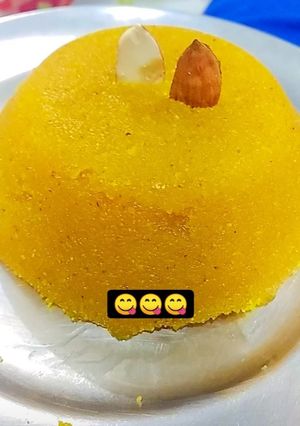
Once all the water is absorbed, you will notice the change in the texture. The ghee also will be visible at the sides. Keep stirring and cooking till you get the final texture of the rava sheera like the below picture. All the water should be absorbed and the halwa will leave the sides of the pan
- 17
. Keep stirring and cooking till you get the final texture of the rava sheera like the below picture. All the water should be absorbed and the halwa will leave the sides of the pan
Similar Recipes
More Recipes
-

-

-

-

-

-
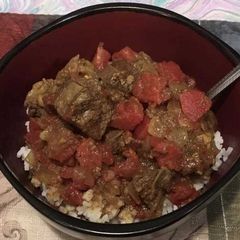
Slow Cooker Goat Curry (myheartbeets.com)

-

-


-
Impossible Banana Bread Coffee Cake
-

Creamy Baked Cheesy Chicken 🐔 Spaghetti 🍝

-

-


-
Plantain Peel thoran (kerala style)

-
-

-
Capsicum🫑& Chicken Cheesy Lasagna 🧀🧀

-

-
 Shivam
 -
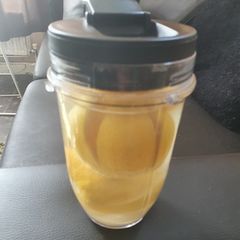
Salt or salt an sugar Preserved Lemons

-
 Simran
 -
 Arti
Arti




Comments (2)