

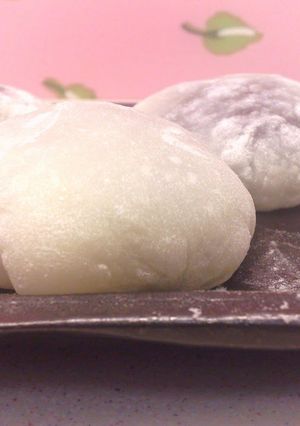
Daifuku (Mochi Dumplings) with Tsubu-an-Like Canned Kidney Beans

Since I don't have a pressure cooker, I can't boil adzuki beans, and since I live overseas, boiled adzuki is so expensive I can't afford it. I made an paste and daifuku with kidney beans, since they were the closest I could find to adzuki.
When I used a can of kidney beans that were close to the expiry date, the beans settled at the bottom of the can resembled an paste already. The more sugar in the daifuku mochi, the longer they can be kept soft in the freezer. (The ratio I use is equal parts shiratamako and sugar to 2 parts water.) If you plan to consume them in 2-3 days, you can halve the amount of sugar. Recipe by byumi
Daifuku (Mochi Dumplings) with Tsubu-an-Like Canned Kidney Beans
Since I don't have a pressure cooker, I can't boil adzuki beans, and since I live overseas, boiled adzuki is so expensive I can't afford it. I made an paste and daifuku with kidney beans, since they were the closest I could find to adzuki.
When I used a can of kidney beans that were close to the expiry date, the beans settled at the bottom of the can resembled an paste already. The more sugar in the daifuku mochi, the longer they can be kept soft in the freezer. (The ratio I use is equal parts shiratamako and sugar to 2 parts water.) If you plan to consume them in 2-3 days, you can halve the amount of sugar. Recipe by byumi
 Open in Cookpad App
Steps
- 1
If the canned kidney beans don't contain additives or any other ingredient besides salt, combine the entire contents of the can with the sugar in a pot and bring to a boil. Otherwise, discard the liquid, add 1 tablespoon of water, and boil with the sugar.
- 2
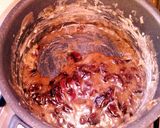
When you can see the bottom of the pot, as shown in the photo, add the salt. Depending on the brand, the beans may already be salted, so adjust to taste. I prefer it on the salty side.
- 3
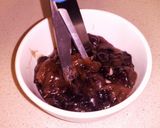
Since this the beans will be too large, cut them with kitchen scissors. You may also use a food processor, but it can be cumbersome to clean and the paste may stick to the sides.
- 4
The paste may be runnier than traditional an paste, but it should thicken once it is chilled. I let it sit overnight in the refrigerator.
- 5
To prepare the daifuku mochi: Combine the shiratamako and sugar in a heat-resistant dish. Gradually add the water little by little, and mix well.
- 6
Cover in plastic wrap, microwave for 2 minutes, mix, then microwave again for 1 minute. If it still hasn't become translucent, microwave for 1 more minute.
- 7
When mixing, use a wet spatula. Place the daifuku mochi on a dusted work surface, flatten it out, and divide it into 4-6 equal pieces with a wet knife.
- 8
Roll each piece into a ball, flatten, then spoon out equal portions of the an paste and wrap them with the dough. Press down on the seam to seal, dust with plenty of katakuriko, and they're ready to serve.
- 9
Shiratamako can be found as "mochiko" or "glutinous rice flour (imported from Thailand), or "sticky rice flour" in Asian specialty food shops.
Cooksnaps

Did you know that you can import recipes from anywhere into Cookpad with one click?
https://blog.cookpad.com/us/cookpad-recipe-import-feature-save-recipes-from-anywhere/
Download Cookpad app to plan your meals and store your cooking ideas in one safe place! https://cookpad.wasmer.app/us/download
People also looked for
Keywords
Similar Recipes
More Recipes
-

High Octane Espresso Chocolate Cookies 🍪

-


-


-


-
Evening cravings. Khekda bhaji

-


-


-


-


-


-

Okara Gnocchi with Prawn and Soy Milk Cream Sauce

-

Delicious Gyoza Dumplings: Fried, Steamed, or Boiled!
-

-


-

 Mrsrachaelr
 -

Easy, Crispy, Dairy-Free Cookies Made with Pancake Mix
-
-

An Easy Way To Rehydrate Soybeans











Comments