CookpadCookpad
Guest
Register or Log In
Save and create recipes, send cooksnaps and more
  • Search
  • Premium
    • Top Cooksnapped Recipes
    • Top Viewed Recipes
  • Premium
  • Challenges
  • FAQ
  • Send Feedback
  • Region
  • Your Collection
Your Collection
To start creating your recipe library, please register or login.
Pozole
Save this recipe to come back to it later.
  • Add Cooksnap
  • Add to folders
  • Print
  • Share
    • Copied!
    • Email
    • Facebook
    • Pin it
    • Twitter
  • Report Recipe
  • See report
  • Edit recipe
  • Delete
CookpadCookpad
Spain Authentic home cooking from Spain, with US measurements.
Originally published on Cookpad Spain as Pozole
A picture of Pozole.

Pozole

mis-recetas
mis-recetas @cook_2441889
España

Pozole is a very traditional Mexican recipe. It's the dish served during the national holiday on September 15th, Mexico's Independence Day.

This is a soup made with a special type of corn (cacahuazintle), meat (pork or chicken), vegetables, and salt. The ingredients can vary depending on the type of pozole or the region of Mexico where it's made.

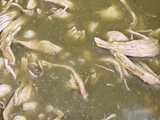
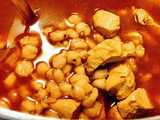
What makes this soup unique is that when the cacahuazintle corn is cooked, it creates a foam, which gives the dish its name (pozole = foamy). A large-kernel variety (cacahuazintle) is used, pre-cooked in a light solution of water and lime for a couple of hours, which helps remove the fibrous husk from the corn. After pre-cooking, the lime solution is discarded and the kernels are rinsed. Then, the corn is cooked again for several hours until the kernels burst open and look like flowers. Once the corn has burst, the meat is added so the stew can absorb the flavor.

The meat most commonly used is pork or chicken, though some versions use fish or seafood.

There is also a vegetarian pozole, where the meat is replaced with gluten, mushrooms, or other types of mushrooms.

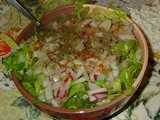
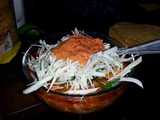
Pozole is usually served in a large, deep clay bowl. When serving, other ingredients are added to enhance the flavor: lettuce, onion, dried oregano, lime juice, radish, salt, and chili. In some regions of Mexico, chopped cabbage, avocado, and fresh cheese are also added. These toppings are placed on the table so each guest can add as much as they like. Pozole is enjoyed with corn tortilla chips and shredded cheese.

Making pozole takes many hours, but it's a simple recipe. Besides being served at parties and celebrations, Mexicans appreciate how easy it is to prepare for a large group.

Pozole was born from the fusion of pre-Hispanic Mexican and Spanish cuisine. Although its pre-Hispanic origins used meats that are no longer consumed today.

The most famous pozoles in Mexico come from Sinaloa, Jalisco, Michoacán, Nayarit, Colima, Guanajuato, and Guerrero.

The basic version is **white pozole**, from which other types are derived.

* **Red pozole** from Sinaloa and Jalisco is made with a red chili sauce (usually guajillo chili). It's one of the most popular pozoles in Mexico.
* **Green pozole** from the state of Guerrero uses a green tomato or green mole (pipian) sauce. In some provinces, one or two canned sardines are added. In the central part of the state, sometimes a raw egg is added.

Pozole is a very traditional Mexican recipe. It's the dish served during the national holiday on September 15th, Mexico's Independence Day.

This is a soup made with a special type of corn (cacahuazintle), meat (pork or chicken), vegetables, and salt. The ingredients can vary depending on the type of pozole or the region of Mexico where it's made.

What makes this soup unique is that when the cacahuazintle corn is cooked, it creates a foam, which gives the dish its name (pozole = foamy). A large-kernel variety (cacahuazintle) is used, pre-cooked in a light solution of water and lime for a couple of hours, which helps remove the fibrous husk from the corn. After pre-cooking, the lime solution is discarded and the kernels are rinsed. Then, the corn is cooked again for several hours until the kernels burst open and look like flowers. Once the corn has burst, the meat is added so the stew can absorb the flavor.

The meat most commonly used is pork or chicken, though some versions use fish or seafood.

There is also a vegetarian pozole, where the meat is replaced with gluten, mushrooms, or other types of mushrooms.

Pozole is usually served in a large, deep clay bowl. When serving, other ingredients are added to enhance the flavor: lettuce, onion, dried oregano, lime juice, radish, salt, and chili. In some regions of Mexico, chopped cabbage, avocado, and fresh cheese are also added. These toppings are placed on the table so each guest can add as much as they like. Pozole is enjoyed with corn tortilla chips and shredded cheese.

Making pozole takes many hours, but it's a simple recipe. Besides being served at parties and celebrations, Mexicans appreciate how easy it is to prepare for a large group.

Pozole was born from the fusion of pre-Hispanic Mexican and Spanish cuisine. Although its pre-Hispanic origins used meats that are no longer consumed today.

The most famous pozoles in Mexico come from Sinaloa, Jalisco, Michoacán, Nayarit, Colima, Guanajuato, and Guerrero.

The basic version is **white pozole**, from which other types are derived.

* **Red pozole** from Sinaloa and Jalisco is made with a red chili sauce (usually guajillo chili). It's one of the most popular pozoles in Mexico.
* **Green pozole** from the state of Guerrero uses a green tomato or green mole (pipian) sauce. In some provinces, one or two canned sardines are added. In the central part of the state, sometimes a raw egg is added.

Read more

Pozole

mis-recetas
mis-recetas @cook_2441889
España

Pozole is a very traditional Mexican recipe. It's the dish served during the national holiday on September 15th, Mexico's Independence Day.

This is a soup made with a special type of corn (cacahuazintle), meat (pork or chicken), vegetables, and salt. The ingredients can vary depending on the type of pozole or the region of Mexico where it's made.

What makes this soup unique is that when the cacahuazintle corn is cooked, it creates a foam, which gives the dish its name (pozole = foamy). A large-kernel variety (cacahuazintle) is used, pre-cooked in a light solution of water and lime for a couple of hours, which helps remove the fibrous husk from the corn. After pre-cooking, the lime solution is discarded and the kernels are rinsed. Then, the corn is cooked again for several hours until the kernels burst open and look like flowers. Once the corn has burst, the meat is added so the stew can absorb the flavor.

The meat most commonly used is pork or chicken, though some versions use fish or seafood.

There is also a vegetarian pozole, where the meat is replaced with gluten, mushrooms, or other types of mushrooms.

Pozole is usually served in a large, deep clay bowl. When serving, other ingredients are added to enhance the flavor: lettuce, onion, dried oregano, lime juice, radish, salt, and chili. In some regions of Mexico, chopped cabbage, avocado, and fresh cheese are also added. These toppings are placed on the table so each guest can add as much as they like. Pozole is enjoyed with corn tortilla chips and shredded cheese.

Making pozole takes many hours, but it's a simple recipe. Besides being served at parties and celebrations, Mexicans appreciate how easy it is to prepare for a large group.

Pozole was born from the fusion of pre-Hispanic Mexican and Spanish cuisine. Although its pre-Hispanic origins used meats that are no longer consumed today.

The most famous pozoles in Mexico come from Sinaloa, Jalisco, Michoacán, Nayarit, Colima, Guanajuato, and Guerrero.

The basic version is **white pozole**, from which other types are derived.

* **Red pozole** from Sinaloa and Jalisco is made with a red chili sauce (usually guajillo chili). It's one of the most popular pozoles in Mexico.
* **Green pozole** from the state of Guerrero uses a green tomato or green mole (pipian) sauce. In some provinces, one or two canned sardines are added. In the central part of the state, sometimes a raw egg is added.

Pozole is a very traditional Mexican recipe. It's the dish served during the national holiday on September 15th, Mexico's Independence Day.

This is a soup made with a special type of corn (cacahuazintle), meat (pork or chicken), vegetables, and salt. The ingredients can vary depending on the type of pozole or the region of Mexico where it's made.

What makes this soup unique is that when the cacahuazintle corn is cooked, it creates a foam, which gives the dish its name (pozole = foamy). A large-kernel variety (cacahuazintle) is used, pre-cooked in a light solution of water and lime for a couple of hours, which helps remove the fibrous husk from the corn. After pre-cooking, the lime solution is discarded and the kernels are rinsed. Then, the corn is cooked again for several hours until the kernels burst open and look like flowers. Once the corn has burst, the meat is added so the stew can absorb the flavor.

The meat most commonly used is pork or chicken, though some versions use fish or seafood.

There is also a vegetarian pozole, where the meat is replaced with gluten, mushrooms, or other types of mushrooms.

Pozole is usually served in a large, deep clay bowl. When serving, other ingredients are added to enhance the flavor: lettuce, onion, dried oregano, lime juice, radish, salt, and chili. In some regions of Mexico, chopped cabbage, avocado, and fresh cheese are also added. These toppings are placed on the table so each guest can add as much as they like. Pozole is enjoyed with corn tortilla chips and shredded cheese.

Making pozole takes many hours, but it's a simple recipe. Besides being served at parties and celebrations, Mexicans appreciate how easy it is to prepare for a large group.

Pozole was born from the fusion of pre-Hispanic Mexican and Spanish cuisine. Although its pre-Hispanic origins used meats that are no longer consumed today.

The most famous pozoles in Mexico come from Sinaloa, Jalisco, Michoacán, Nayarit, Colima, Guanajuato, and Guerrero.

The basic version is **white pozole**, from which other types are derived.

* **Red pozole** from Sinaloa and Jalisco is made with a red chili sauce (usually guajillo chili). It's one of the most popular pozoles in Mexico.
* **Green pozole** from the state of Guerrero uses a green tomato or green mole (pipian) sauce. In some provinces, one or two canned sardines are added. In the central part of the state, sometimes a raw egg is added.

Read more
Saved
Save this recipe to come back to it later.
Edit recipe
See report
Add to folders
Add CooksnapAdd Cooksnap
ShareShare
  • Copied!
  • Email
  • Facebook
  • Pin it
  • Twitter
PrintPrint
  • PrintPrint
  • Add CooksnapAdd Cooksnap
  • Report Recipe
  • See report
  • Delete
Share
  • Copied!
  • Email
  • Facebook
  • Pin it
  • Twitter
Save this recipe to come back to it later.
  • Add Cooksnap
  • Add to folders
  • Print
  • Report Recipe
  • See report
  • Edit recipe
  • Delete

Ingredients

30 minutes
Serves 4 servings
  1. 1 1/8 lbspork, cut into cubes (about 500 grams)
  2. 7 ozchicken, cut into pieces (about 200 grams)
  3. 2 1/2 cupscanned hominy (about 450 grams)
  4. 1onion
  5. 1garlic bulb
  6. 4 1/4 cupschicken broth (about 1 liter)
  7. 1 pinchground cumin
  8. 1bay leaf
  9. A fewfresh oregano leaves
  10. A fewdried chili flakes
  11. 1lime
  12. corn tortilla chips
  13. pork rinds (chicharrones)
  14. 1 piececabbage
  15. oil
  16. salt
  17. pepper
Cookpad Open in Cookpad App
Saved
Save this recipe to come back to it later.

Steps

30 minutes
  1. 1

    Prepare a large pot and add the pork and chicken. Cover with broth, season with salt, and bring to a boil. Meanwhile, lightly crush the garlic bulb to open it, slice the onion into thin strips, and set aside.

  2. 2

    When the broth is boiling, add the garlic bulb, bay leaf, and onion. Cook until the meat is tender.

  3. 3

    Remove the bay leaf, take out the meat, separate it from the bones, and shred it. Set aside.

  4. 4

    Add the hominy, cumin, salt, and pepper to the pot. Bring to a boil. Meanwhile, finely shred the cabbage.

  5. 5

    Serve in deep bowls with a portion of pork and chicken in each. Add cabbage, pork rinds, oregano, and chili flakes, then ladle in the broth.

  6. 6

    Add two lime wedges and serve with corn tortilla chips. Delicious!

Saved
Save this recipe to come back to it later.
Edit recipe
See report
Add to folders
Add CooksnapAdd Cooksnap
ShareShare
  • Copied!
  • Email
  • Facebook
  • Pin it
  • Twitter
PrintPrint
  • PrintPrint
  • Add CooksnapAdd Cooksnap
  • Report Recipe
  • See report
  • Delete

Cooksnaps

Saved
Save this recipe to come back to it later.
  • Add Cooksnap
  • Add to folders
  • Print
  • Share
    • Copied!
    • Email
    • Facebook
    • Pin it
    • Twitter
  • Report Recipe
  • See report
  • Edit recipe
  • Delete

Copied!

mis-recetas
mis-recetas @cook_2441889
Published in the US on August 27, 2025 16:33
España
Recetas del mundo, tradicionales, prácticas y de siempre que compartimos en la Comunidad para disfrutar juntos de la cocina
Read more

Similar Recipes

More Recipes

  1. A picture of Beetroot Paratha.

    Beetroot Paratha

    Pabi Chettri Pabi Chettri
  2. A picture of Tomato egg curry.

    Tomato egg curry

    Barnali Debdas Barnali Debdas
  3. A picture of Mango Mini Cake.

    Mango Mini Cake

    Deepa Rupani Deepa Rupani
  4. A picture of Tomato raw mango chutney.

    Tomato raw mango chutney

    Vidyutaa Kashyap Vidyutaa Kashyap
  5. A picture of Delicious Peach Chutney.

    Delicious Peach Chutney

    Sangita Vyas Sangita Vyas
  6. A picture of Drumstick Curry.

    Drumstick Curry

    Sampada Shrungarpure Sampada Shrungarpure
  7. A picture of Healthy Mango Oats Dryfruit Smoothie Bowl.

    Healthy Mango Oats Dryfruit Smoothie Bowl

    Rita Talukdar Adak Rita Talukdar Adak
  8. A picture of Ham and Bean Stew.

    Ham and Bean Stew

    ifuchi ifuchi
  9. A picture of Sprouts Dhokala.

    Sprouts Dhokala

    Surekha Dongargaonkar Surekha Dongargaonkar
  10. A picture of Mango Melange.

    Mango Melange

    Nutan Shah Nutan Shah
  11. A picture of Pop, Pop, Popovers!.

    Pop, Pop, Popovers!

    Jean Layton Jean Layton
  12. A picture of Rugelach-Cinnamon Walnut, Almond and Plum Jam.

    Rugelach-Cinnamon Walnut, Almond and Plum Jam

    Jean Layton Jean Layton
  13. A picture of Gluten-Free Girl Scouts.

    Gluten-Free Girl Scouts

    Jean Layton Jean Layton
  14. A picture of Brown Rice Spaghetti with Walnut cream sauce.

    Brown Rice Spaghetti with Walnut cream sauce

    Jean Layton Jean Layton
  15. A picture of Caprese Panini.

    Caprese Panini

    Iman Saleh Iman Saleh
  16. A picture of Fettuccine Alfredo.

    Fettuccine Alfredo

    Dorar el Bahrain Dorar el Bahrain
  17. A picture of Shrimp Cocktail.

    Shrimp Cocktail

    Dorar el Bahrain Dorar el Bahrain
  18. A picture of Easy & delicious Apple Crumble.

    Easy & delicious Apple Crumble

    Yasmina007 Yasmina007
  19. A picture of Tuna Melt.

    Tuna Melt

    Oum el Baneen Oum el Baneen
https://cookpad.wasmer.app/us/recipes/235771
Cookpad Open in Cookpad App

About Us

Our mission at Cookpad is to make everyday cooking fun, because we believe that cooking is key to a happier and healthier life for people, communities and the planet. We empower home cooks all over the world to help each other by sharing their recipes and cooking experiences.

Subscribe to Premium for exclusive features & benefits!

Cookpad Communities

🇺🇸 United States 🇬🇧 United Kingdom 🇪🇸 España 🇦🇷 Argentina 🇺🇾 Uruguay 🇲🇽 México 🇨🇱 Chile 🇻🇳 Việt Nam 🇹🇭 ไทย 🇮🇩 Indonesia 🇫🇷 France 🇸🇦 السعودية 🇹🇼 臺灣 🇮🇹 Italia 🇮🇷 ایران 🇮🇳 India 🇭🇺 Magyarország 🇳🇬 Nigeria 🇬🇷 Ελλάδα 🇲🇾 Malaysia 🇵🇹 Portugal 🇺🇦 Україна 🇯🇵 日本 See All

Learn More

Cookpad Premium Careers Feedback Blog Terms of Service Community Guidelines Privacy Policy Frequently Asked Questions

Download our app

Open Cookpad App on Google Play Open Cookpad App on App Store
Copyright © Cookpad Inc. All Rights Reserved
close