CookpadCookpad
Guest
Register or Log In
Save and create recipes, send cooksnaps and more
  • Search
  • Premium
    • Top Cooksnapped Recipes
    • Top Viewed Recipes
  • Premium
  • Challenges
  • FAQ
  • Send Feedback
  • Region
  • Your Collection
Your Collection
To start creating your recipe library, please register or login.
Gramma Mangalitsa - squash and salami
Save this recipe to come back to it later.
  • Add Cooksnap
  • Add to folders
  • Print
  • Share
    • Copied!
    • Email
    • Facebook
    • Pin it
    • Twitter
  • Report Recipe
  • See report
  • Edit recipe
  • Delete
CookpadCookpad
A picture of Gramma Mangalitsa - squash and salami.

Gramma Mangalitsa - squash and salami

Laura
Laura @FeelBetter
Milton Keynes, England

Butternut squash is native to America and was developed in Massachusetts in 1944 by Charles Legget by crossing a green pumpkin and a gooseneck squash. 'Butternut' comes from its buttery flesh and nutty flavour.

The word squash comes from the Narragansett word askutasquash meaning ‘eaten raw or uncooked’. Native Americans believed that squash was so nutritious that they would bury their dead with it to sustain them on their final journey.

Although botanically a berry, butternut squash is used culinarily as a vegetable worldwide. In Antipodean countries it is known as gramma. It is fabulous as soup and holds up well with varying spices but today I’m roasting it and giving it Italian/Hungarian flavours of mozzarella, walnuts and Mangalitsa salami.

It is unknown when the first salami was made. In Roman times, it belonged to a group of food called salsum, meaning ‘salted’. Since prehistoric times, salt was known to be an indispensible way to preserve meat; salt naturally expels water and blocks the proliferation of bacteria.

The much prized Mangalitsa (hog with a lot of lard) pig appeared in the time of the Austro-Hungarian Empire, after Archduke Joseph Anton Johann received some Sumadija pigs from a Serbian prince and crossed them with Bakony and Szalonta pigs. The resulting ‘curly hair pig’ was originally only for the Habsburg royalty but became so popular for its wonderful taste that, by the end of the 19th Century, it became the foremost breed in Europe. #GoldenApron23

Butternut squash is native to America and was developed in Massachusetts in 1944 by Charles Legget by crossing a green pumpkin and a gooseneck squash. 'Butternut' comes from its buttery flesh and nutty flavour.

The word squash comes from the Narragansett word askutasquash meaning ‘eaten raw or uncooked’. Native Americans believed that squash was so nutritious that they would bury their dead with it to sustain them on their final journey.

Although botanically a berry, butternut squash is used culinarily as a vegetable worldwide. In Antipodean countries it is known as gramma. It is fabulous as soup and holds up well with varying spices but today I’m roasting it and giving it Italian/Hungarian flavours of mozzarella, walnuts and Mangalitsa salami.

It is unknown when the first salami was made. In Roman times, it belonged to a group of food called salsum, meaning ‘salted’. Since prehistoric times, salt was known to be an indispensible way to preserve meat; salt naturally expels water and blocks the proliferation of bacteria.

The much prized Mangalitsa (hog with a lot of lard) pig appeared in the time of the Austro-Hungarian Empire, after Archduke Joseph Anton Johann received some Sumadija pigs from a Serbian prince and crossed them with Bakony and Szalonta pigs. The resulting ‘curly hair pig’ was originally only for the Habsburg royalty but became so popular for its wonderful taste that, by the end of the 19th Century, it became the foremost breed in Europe. #GoldenApron23

Read more

Gramma Mangalitsa - squash and salami

Laura
Laura @FeelBetter
Milton Keynes, England

Butternut squash is native to America and was developed in Massachusetts in 1944 by Charles Legget by crossing a green pumpkin and a gooseneck squash. 'Butternut' comes from its buttery flesh and nutty flavour.

The word squash comes from the Narragansett word askutasquash meaning ‘eaten raw or uncooked’. Native Americans believed that squash was so nutritious that they would bury their dead with it to sustain them on their final journey.

Although botanically a berry, butternut squash is used culinarily as a vegetable worldwide. In Antipodean countries it is known as gramma. It is fabulous as soup and holds up well with varying spices but today I’m roasting it and giving it Italian/Hungarian flavours of mozzarella, walnuts and Mangalitsa salami.

It is unknown when the first salami was made. In Roman times, it belonged to a group of food called salsum, meaning ‘salted’. Since prehistoric times, salt was known to be an indispensible way to preserve meat; salt naturally expels water and blocks the proliferation of bacteria.

The much prized Mangalitsa (hog with a lot of lard) pig appeared in the time of the Austro-Hungarian Empire, after Archduke Joseph Anton Johann received some Sumadija pigs from a Serbian prince and crossed them with Bakony and Szalonta pigs. The resulting ‘curly hair pig’ was originally only for the Habsburg royalty but became so popular for its wonderful taste that, by the end of the 19th Century, it became the foremost breed in Europe. #GoldenApron23

Butternut squash is native to America and was developed in Massachusetts in 1944 by Charles Legget by crossing a green pumpkin and a gooseneck squash. 'Butternut' comes from its buttery flesh and nutty flavour.

The word squash comes from the Narragansett word askutasquash meaning ‘eaten raw or uncooked’. Native Americans believed that squash was so nutritious that they would bury their dead with it to sustain them on their final journey.

Although botanically a berry, butternut squash is used culinarily as a vegetable worldwide. In Antipodean countries it is known as gramma. It is fabulous as soup and holds up well with varying spices but today I’m roasting it and giving it Italian/Hungarian flavours of mozzarella, walnuts and Mangalitsa salami.

It is unknown when the first salami was made. In Roman times, it belonged to a group of food called salsum, meaning ‘salted’. Since prehistoric times, salt was known to be an indispensible way to preserve meat; salt naturally expels water and blocks the proliferation of bacteria.

The much prized Mangalitsa (hog with a lot of lard) pig appeared in the time of the Austro-Hungarian Empire, after Archduke Joseph Anton Johann received some Sumadija pigs from a Serbian prince and crossed them with Bakony and Szalonta pigs. The resulting ‘curly hair pig’ was originally only for the Habsburg royalty but became so popular for its wonderful taste that, by the end of the 19th Century, it became the foremost breed in Europe. #GoldenApron23

Read more
Saved
Save this recipe to come back to it later.
Edit recipe
See report
Add to folders
Add CooksnapAdd Cooksnap
ShareShare
  • Copied!
  • Email
  • Facebook
  • Pin it
  • Twitter
PrintPrint
  • PrintPrint
  • Add CooksnapAdd Cooksnap
  • Report Recipe
  • See report
  • Delete
Share
  • Copied!
  • Email
  • Facebook
  • Pin it
  • Twitter
Save this recipe to come back to it later.
  • Add Cooksnap
  • Add to folders
  • Print
  • Report Recipe
  • See report
  • Edit recipe
  • Delete

Ingredients

40 minutes
2 servings
  1. 1x 600g squash
  2. 1 tablespoonolive oil
  3. 2small garlic cloves
  4. freshly ground salt and pepper
  5. 20 gchopped walnuts
  6. 75 gsalami, chopped
  7. leavesfew spinach
  8. 1 tablespoonbasil pesto
  9. 90 gMozzarella pearls
  10. 2 tablespoonsparmesan, finely grated
  11. good pinch lime pepper (optional)
  12. To serve:
  13. 1 tablespoondried onion flakes
  14. chunk of crusty bread
Cookpad Open in Cookpad App
Saved
Save this recipe to come back to it later.

Steps

40 minutes
  1. 1

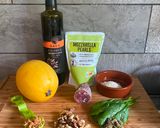
    Heat the oven to 200 degrees C fan. Cut the squash in half with a sharp knife and scoop out the seeds. Rub the cut sides of the squash with half of the oil and season with salt and pepper. Prick the garlic cloves and add one to each of the halves.
    A picture of step 1 of Gramma Mangalitsa - squash and salami.
  2. 2

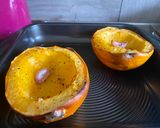
    Place the squash in a baking dish and roast for 30-40 minutes until tender. Let cool slightly. Carefully scrape the inside of the squash with a fork to loosen the flesh.
    A picture of step 2 of Gramma Mangalitsa - squash and salami.
  3. 3

    Heat a skillet over medium high heat. Add the walnuts pieces, lightly toast, remove from the pan and set aside. Add a splash of oil and the salami. Cook for 2 minutes until the oil starts to colour. Turn off the heat and add the spinach and pesto and stir. Squeeze out the garlic from the skin and stir in.
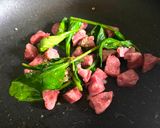
    A picture of step 3 of Gramma Mangalitsa - squash and salami.
  4. 4

    Divide the walnuts between the 2 halves of squash, top with the salami/spinach, mozzarella and sprinkle with Parmesan cheese and the lime pepper (if adding). Return to the oven for 10 minutes until the cheese is bubbling. Top with the dried onion flakes and serve with a few salad leaves and a chunk of crusty bread.
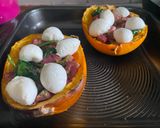
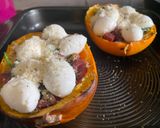
    A picture of step 4 of Gramma Mangalitsa - squash and salami.
    A picture of step 4 of Gramma Mangalitsa - squash and salami.
    A picture of step 4 of Gramma Mangalitsa - squash and salami.
Saved
Save this recipe to come back to it later.
Edit recipe
See report
Add to folders
Add CooksnapAdd Cooksnap
ShareShare
  • Copied!
  • Email
  • Facebook
  • Pin it
  • Twitter
PrintPrint
  • PrintPrint
  • Add CooksnapAdd Cooksnap
  • Report Recipe
  • See report
  • Delete

Cooksnaps

Saved
Save this recipe to come back to it later.
  • Add Cooksnap
  • Add to folders
  • Print
  • Share
    • Copied!
    • Email
    • Facebook
    • Pin it
    • Twitter
  • Report Recipe
  • See report
  • Edit recipe
  • Delete

Copied!

Laura
Laura @FeelBetter
on October 01, 2023 16:02
Milton Keynes, England
Out and Out FoodieSandgrounder#FeelBetterMK
Read more

Comments

Guest
Add a comment
0/0

Similar Recipes

More Recipes

  1. A picture of Lemon kadhi.

    Lemon kadhi

    Foram C. Virani Foram C. Virani
  2. A picture of Mango Iced Tea.

    Mango Iced Tea

    Shradha Nema (foodgazin') Shradha Nema (foodgazin')
  3. A picture of Oli Bhel - Pune Style Wet Bhel.

    Oli Bhel - Pune Style Wet Bhel

    ZMA ZMA
  4. A picture of Gawar phali dhokli nu shak.

    Gawar phali dhokli nu shak

    Monika Jain Monika Jain
  5. A picture of Mango Lassi.

    Mango Lassi

    Deepti Johri Deepti Johri
  6. A picture of Drumstick Paneer Sabzi.

    Drumstick Paneer Sabzi

    Heena Jani Heena Jani
  7. A picture of Tomato Shorba.

    Tomato Shorba

    Ananthi @ Crazy Cookie Ananthi @ Crazy Cookie
  8. A picture of Simple Crème Anglaise Base.

    Simple Crème Anglaise Base

    Max Max
  9. A picture of Tomato Curry.

    Tomato Curry

    Shobha Deshmukh Shobha Deshmukh
  10. A picture of Mango Custard.

    Mango Custard

    Sudipa Gope Sudipa Gope
  11. A picture of Fried Rice 2.0.

    Fried Rice 2.0

    Nichole Nichole
  12. A picture of Beef Lumpia Shanghai.

    Beef Lumpia Shanghai

    Minda Minda
  13. A picture of Spicy Southern Corn Dip.

    Spicy Southern Corn Dip

    Katya Katyusha Katya Katyusha
  14. A picture of DeDee's Manicotti.

    DeDee's Manicotti

    DeDee Freeman DeDee Freeman
  15. A picture of Rice flour pancakes with frozen banana yogurt and strawberry sauce.

    Rice flour pancakes with frozen banana yogurt and strawberry sauce

    Jon Michelena Jon Michelena
  16. A picture of Hemp seeds kheer.

    Hemp seeds kheer

    Seema Sharma Seema Sharma
  17. A picture of Green Peas and Potato Kurma.

    Green Peas and Potato Kurma

    Swaminathan.V Swaminathan.V
  18. A picture of Chamsur Dana Drink.

    Chamsur Dana Drink

    Nisha Paun Nisha Paun
  19. A picture of Isabgol Drink.

    Isabgol Drink

    Nisha Paun Nisha Paun
  20. A picture of Chamsur dana sukhadi.

    Chamsur dana sukhadi

    Pooja Prajapati Pooja Prajapati
  21. A picture of Quinoa flour pancake.

    Quinoa flour pancake

    Pooja Prajapati Pooja Prajapati
  22. A picture of Vegetable Kabab.

    Vegetable Kabab

    Sudipa Gope Sudipa Gope
  23. A picture of Quinoa dosa with chana dal coriander chutney.

    Quinoa dosa with chana dal coriander chutney

    Susmita Patnaik Susmita Patnaik
  24. A picture of Fried Rice 2.0.

    Fried Rice 2.0

    Nichole Nichole
  25. A picture of Quinoa stuff paratha.

    Quinoa stuff paratha

    Swati Sheth Swati Sheth
https://cookpad.wasmer.app/us/recipes/17098488
Cookpad Open in Cookpad App

About Us

Our mission at Cookpad is to make everyday cooking fun, because we believe that cooking is key to a happier and healthier life for people, communities and the planet. We empower home cooks all over the world to help each other by sharing their recipes and cooking experiences.

Subscribe to Premium for exclusive features & benefits!

Cookpad Communities

🇺🇸 United States 🇬🇧 United Kingdom 🇪🇸 España 🇦🇷 Argentina 🇺🇾 Uruguay 🇲🇽 México 🇨🇱 Chile 🇻🇳 Việt Nam 🇹🇭 ไทย 🇮🇩 Indonesia 🇫🇷 France 🇸🇦 السعودية 🇹🇼 臺灣 🇮🇹 Italia 🇮🇷 ایران 🇮🇳 India 🇭🇺 Magyarország 🇳🇬 Nigeria 🇬🇷 Ελλάδα 🇲🇾 Malaysia 🇵🇹 Portugal 🇺🇦 Україна 🇯🇵 日本 See All

Learn More

Cookpad Premium Careers Feedback Blog Terms of Service Community Guidelines Privacy Policy Frequently Asked Questions

Download our app

Open Cookpad App on Google Play Open Cookpad App on App Store
Copyright © Cookpad Inc. All Rights Reserved
close