CookpadCookpad
Guest
Register or Log In
Save and create recipes, send cooksnaps and more
  • Search
  • Premium
    • Top Cooksnapped Recipes
    • Top Viewed Recipes
  • Premium
  • Challenges
  • FAQ
  • Send Feedback
  • Region
  • Your Collection
Your Collection
To start creating your recipe library, please register or login.
Devonshire Scones
Save this recipe to come back to it later.
  • Add Cooksnap
  • Add to folders
  • Print
  • Share
    • Copied!
    • Email
    • Facebook
    • Pin it
    • Twitter
  • Report Recipe
  • See report
  • Edit recipe
  • Delete
CookpadCookpad
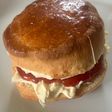
A picture of Devonshire Scones.

Devonshire Scones

Laura
Laura @FeelBetter
Milton Keynes, England

It’s scone as in ‘gone’, not scone as in ‘bone’ ~ YouGov poll, 2016

The great scone schism is one of the many regional and social divisions in the history of Britain’s cakes, buns and biscuits and what we call them.

The sun is making brief appearances through the clouds and the trees are suddenly covered in leaves once again. Time to make cucumber sandwiches and a batch of scones. Quintessentially English and associated with afternoon tea, not to be confused with high tea.

Afternoon tea is elegant and light and served around 4 pm while high tea is a hearty 5–7 pm working-class evening meal featuring savory meats and pies and often called supper.

Scones originated in Scotland in the early 1500s, initially as flat, oat-based griddle cakes called bannocks. They evolved into oven-baked, fluffy treats with the introduction of baking powder in the 19th century, becoming a staple of British afternoon tea popularized by Anna, Duchess of Bedford, wishing to have a light snack between lunch and dinner.

Queen Victoria popularised the tradition of eating scones with clotted cream and jam during her afternoon tea, enhancing their popularity in high society.

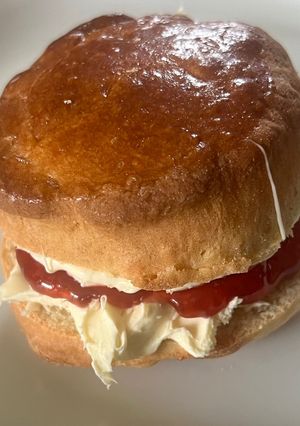
The debate for the correct order for cream and jam on a scone is a famous regional dispute, often referred to as the ‘cream tea controversy’. In Cornwall it’s jam topped with clotted cream and in Devon cream topped with jam but one must never put either on a fruit scone, it’s a capital offence! #CookpadApron2026

It’s scone as in ‘gone’, not scone as in ‘bone’ ~ YouGov poll, 2016

The great scone schism is one of the many regional and social divisions in the history of Britain’s cakes, buns and biscuits and what we call them.

The sun is making brief appearances through the clouds and the trees are suddenly covered in leaves once again. Time to make cucumber sandwiches and a batch of scones. Quintessentially English and associated with afternoon tea, not to be confused with high tea.

Afternoon tea is elegant and light and served around 4 pm while high tea is a hearty 5–7 pm working-class evening meal featuring savory meats and pies and often called supper.

Scones originated in Scotland in the early 1500s, initially as flat, oat-based griddle cakes called bannocks. They evolved into oven-baked, fluffy treats with the introduction of baking powder in the 19th century, becoming a staple of British afternoon tea popularized by Anna, Duchess of Bedford, wishing to have a light snack between lunch and dinner.

Queen Victoria popularised the tradition of eating scones with clotted cream and jam during her afternoon tea, enhancing their popularity in high society.

The debate for the correct order for cream and jam on a scone is a famous regional dispute, often referred to as the ‘cream tea controversy’. In Cornwall it’s jam topped with clotted cream and in Devon cream topped with jam but one must never put either on a fruit scone, it’s a capital offence! #CookpadApron2026

Read more

Devonshire Scones

Laura
Laura @FeelBetter
Milton Keynes, England

It’s scone as in ‘gone’, not scone as in ‘bone’ ~ YouGov poll, 2016

The great scone schism is one of the many regional and social divisions in the history of Britain’s cakes, buns and biscuits and what we call them.

The sun is making brief appearances through the clouds and the trees are suddenly covered in leaves once again. Time to make cucumber sandwiches and a batch of scones. Quintessentially English and associated with afternoon tea, not to be confused with high tea.

Afternoon tea is elegant and light and served around 4 pm while high tea is a hearty 5–7 pm working-class evening meal featuring savory meats and pies and often called supper.

Scones originated in Scotland in the early 1500s, initially as flat, oat-based griddle cakes called bannocks. They evolved into oven-baked, fluffy treats with the introduction of baking powder in the 19th century, becoming a staple of British afternoon tea popularized by Anna, Duchess of Bedford, wishing to have a light snack between lunch and dinner.

Queen Victoria popularised the tradition of eating scones with clotted cream and jam during her afternoon tea, enhancing their popularity in high society.

The debate for the correct order for cream and jam on a scone is a famous regional dispute, often referred to as the ‘cream tea controversy’. In Cornwall it’s jam topped with clotted cream and in Devon cream topped with jam but one must never put either on a fruit scone, it’s a capital offence! #CookpadApron2026

It’s scone as in ‘gone’, not scone as in ‘bone’ ~ YouGov poll, 2016

The great scone schism is one of the many regional and social divisions in the history of Britain’s cakes, buns and biscuits and what we call them.

The sun is making brief appearances through the clouds and the trees are suddenly covered in leaves once again. Time to make cucumber sandwiches and a batch of scones. Quintessentially English and associated with afternoon tea, not to be confused with high tea.

Afternoon tea is elegant and light and served around 4 pm while high tea is a hearty 5–7 pm working-class evening meal featuring savory meats and pies and often called supper.

Scones originated in Scotland in the early 1500s, initially as flat, oat-based griddle cakes called bannocks. They evolved into oven-baked, fluffy treats with the introduction of baking powder in the 19th century, becoming a staple of British afternoon tea popularized by Anna, Duchess of Bedford, wishing to have a light snack between lunch and dinner.

Queen Victoria popularised the tradition of eating scones with clotted cream and jam during her afternoon tea, enhancing their popularity in high society.

The debate for the correct order for cream and jam on a scone is a famous regional dispute, often referred to as the ‘cream tea controversy’. In Cornwall it’s jam topped with clotted cream and in Devon cream topped with jam but one must never put either on a fruit scone, it’s a capital offence! #CookpadApron2026

Read more
Saved
Save this recipe to come back to it later.
Edit recipe
See report
Add to folders
Add CooksnapAdd Cooksnap
ShareShare
  • Copied!
  • Email
  • Facebook
  • Pin it
  • Twitter
PrintPrint
  • PrintPrint
  • Add CooksnapAdd Cooksnap
  • Report Recipe
  • See report
  • Delete
Share
  • Copied!
  • Email
  • Facebook
  • Pin it
  • Twitter
Save this recipe to come back to it later.
  • Add Cooksnap
  • Add to folders
  • Print
  • Report Recipe
  • See report
  • Edit recipe
  • Delete

Ingredients

15 minutes
6 scones
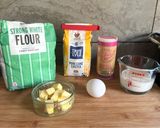
  • 250 gstrong white flour
  • 40 gsoftened butter
  • 40 gcaster sugar
  • 1medium eggs
  • 2 1/2 tspbaking powder
  • 125 mlmilk
  • small egg beaten with a pinch of salt for glazing
  • To serve:
  • clotted cream
  • strawberry preserve/jam
Cookpad Open in Cookpad App
Saved
Save this recipe to come back to it later.

Steps

15 minutes
  1. 1

    Preheat the oven to 200°C fan. Lightly grease a baking tray with butter and line it with baking paper.
    A picture of step 1 of Devonshire Scones.
  2. 2

    Put 225 g flour into a large bowl and add the butter. Rub the flour and butter together with your fingers to create a breadcrumb-like mixture.
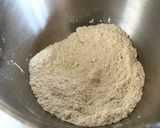
    A picture of step 2 of Devonshire Scones.
  3. 3

    Add the sugar, eggs and baking powder and use a spoon to turn the mixture gently. Make sure you mix all the way down to the bottom and incorporate all of the ingredients.
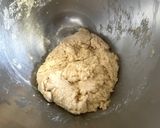
    A picture of step 3 of Devonshire Scones.
  4. 4

    Now add half of the milk and keep turning the mixture gently with the spoon to combine. Then add the remaining milk a little at a time and bring everything together to form a very soft, sticky dough. Note: may not need to add all of the milk.

  5. 5

    Sprinkle most of the remaining flour onto a clean work surface. Tip the soft dough out onto the work surface and sprinkle the rest of the flour on top. The mixture will be wet and sticky.
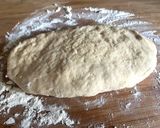
    A picture of step 5 of Devonshire Scones.
  6. 6

    Fold the dough in half, then turn the dough 90 degrees and repeat. By folding and turning the mixture in this way (called chaffing) the last of the flour will be incorporated. Do this a few times until a smooth dough is formed. If the mixture becomes too sticky use some extra flour to coat the mixture. Be careful not to overwork the dough.
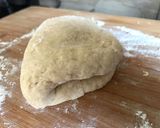
    A picture of step 6 of Devonshire Scones.
  7. 7

    Sprinkle flour onto the work surface and the top of the dough, then use the rolling pin to roll up from the middle and then down from the middle. Turn the dough by 90 degrees and continue to roll until it’s about 2.5 cm thick. Relax the dough slightly by lifting the edges and allowing the dough to drop back onto the work surface.
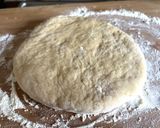
    A picture of step 7 of Devonshire Scones.
  8. 8

    Using a non-fluted pastry cutter, stamp out rounds from the pastry and place them onto the baking tray. Dip the edge of the pastry cutter in flour to make it easier to cut out the scones without them sticking. Don’t twist the cutter – just press firmly, then lift it up and push the dough out. Roll up any remaining dough and cut out the final scones. If you don’t have a pastry cutter, square up the dough and cut into 6 equal squares.
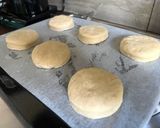
    A picture of step 8 of Devonshire Scones.
  9. 9

    Place the scones on the baking tray and leave them to rest for a few minutes to let the baking powder work. Then use a pastry brush to glaze them with the beaten egg and salt mixture. Be careful to keep the glaze on the top of the scones because if it runs down the sides it will stop them rising evenly. Leave for 5 minutes then brush again with egg wash.
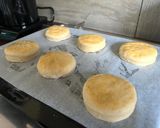
    A picture of step 9 of Devonshire Scones.
  10. 10

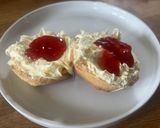
    Bake the scones in the middle of the oven for 15 minutes, or until the scones have risen and golden-brown. Leave the scones to cool, then split in half and top with clotted cream and jam.
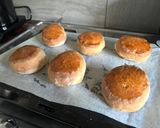
    A picture of step 10 of Devonshire Scones.
    A picture of step 10 of Devonshire Scones.

Tips

Strong white flour seems to hold the scones together better but it’s fine to use plain flour.

Saved
Save this recipe to come back to it later.
Edit recipe
See report
Add to folders
Add CooksnapAdd Cooksnap
ShareShare
  • Copied!
  • Email
  • Facebook
  • Pin it
  • Twitter
PrintPrint
  • PrintPrint
  • Add CooksnapAdd Cooksnap
  • Report Recipe
  • See report
  • Delete

Cooksnaps

Saved
Save this recipe to come back to it later.
  • Add Cooksnap
  • Add to folders
  • Print
  • Share
    • Copied!
    • Email
    • Facebook
    • Pin it
    • Twitter
  • Report Recipe
  • See report
  • Edit recipe
  • Delete

Copied!

Laura
Laura @FeelBetter
on April 15, 2026 18:55
Milton Keynes, England
Out and Out FoodieSandgrounder#FeelBetterMK
Read more

Comments (2)

Daniella 🐅
Daniella 🐅 @Daniellacuisine000
April 15, 2026 21:01
😋🍽️🥣
Guest
Add a comment
0/0

Similar Recipes

More Recipes

  1. A picture of (Coconut) Ricotta Panna Cotta.

    (Coconut) Ricotta Panna Cotta

    Mayflower Mayflower
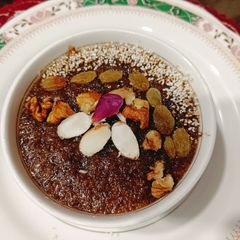
  2. A picture of Aaliv Ladoo - Garden Cress Seeds Ladoo.

    Aaliv Ladoo - Garden Cress Seeds Ladoo

    Surekha Dongargaonkar Surekha Dongargaonkar
  3. A picture of Pecans and Sweet Taters.

    Pecans and Sweet Taters

    skunkmonkey101 skunkmonkey101
  4. A picture of Onion Pakora / Fritters.

    Onion Pakora / Fritters

    Bethica Das Bethica Das
  5. A picture of Lobia Paniyaram / Appe.

    Lobia Paniyaram / Appe

    Bethica Das Bethica Das
  6. A picture of Methi Onion Pakora.

    Methi Onion Pakora

    Nutan Shah Nutan Shah
  7. A picture of Diet Milk Cookies 🍪🍪.

    Diet Milk Cookies 🍪🍪

    Kulsoom Bukhari Kulsoom Bukhari
  8. A picture of Succulent Short Ribs.

    Succulent Short Ribs

    Maggie Conlon Maggie Conlon
  9. A picture of Non-Fried Egg Yolk & Veggies Pakora.

    Non-Fried Egg Yolk & Veggies Pakora

    Uzma Syed Uzma Syed
  10. A picture of Sattu Atta.

    Sattu Atta

    Pragati Hakim Pragati Hakim
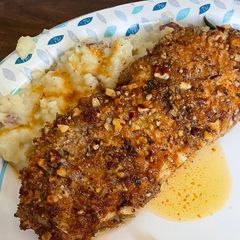
  11. A picture of Pecan Crusted Chicken with Hot Honey Butter.

    Pecan Crusted Chicken with Hot Honey Butter

    Elyse Rose Elyse Rose
  12. A picture of Pasta with Arugula, Cashews, and Feta Pesto.

    Pasta with Arugula, Cashews, and Feta Pesto

    Ricardo Ricardo
  13. A picture of Kadai Prawn Biryani (Simple Home Version).

    Kadai Prawn Biryani (Simple Home Version)

    DSK DSK
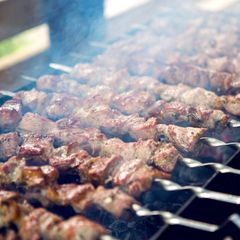
  14. A picture of UAE-Style Citrus Yogurt Beef Kebabs.

    UAE-Style Citrus Yogurt Beef Kebabs

    Tim Griffin Tim Griffin
  15. A picture of Greek Yogurt, Healthy Ice Cream cheesecake.

    Greek Yogurt, Healthy Ice Cream cheesecake

    Ryan Ryan
  16. A picture of UAE-Style Citrus Yogurt Beef Kebabs.

    UAE-Style Citrus Yogurt Beef Kebabs

    Tim Griffin Tim Griffin
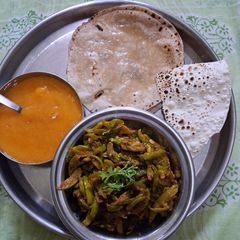
  17. A picture of Tindora masala.

    Tindora masala

    pinal Patel pinal Patel
  18. A picture of Shahi Modak - Fried Modak.

    Shahi Modak - Fried Modak

    Surekha Dongargaonkar Surekha Dongargaonkar
  19. A picture of Lauki Tomato Subji.

    Lauki Tomato Subji

    Nutan Shah Nutan Shah
  20. A picture of High-Heat Roasted Cauliflower.

    High-Heat Roasted Cauliflower

    Tim Griffin Tim Griffin
  21. A picture of Delicious Cupcakes.

    Delicious Cupcakes

    Jamila Ibrahim Tunau Jamila Ibrahim Tunau
  22. A picture of Pecan Crusted Chicken with Hot Honey Butter.

    Pecan Crusted Chicken with Hot Honey Butter

    Elyse Rose Elyse Rose
  23. A picture of Keto Pizza Ice Cream.

    Keto Pizza Ice Cream

    Ryan Ryan
  24. A picture of Keto Greek Yogurt Ice Cream with Peanut Butter and Rose Water.

    Keto Greek Yogurt Ice Cream with Peanut Butter and Rose Water

    Ryan Ryan
  25. A picture of Greek Yogurt, Healthy Ice Cream cheesecake.

    Greek Yogurt, Healthy Ice Cream cheesecake

    Ryan Ryan
https://cookpad.wasmer.app/us/recipes/25646575
Cookpad Open in Cookpad App

About Us

Our mission at Cookpad is to make everyday cooking fun, because we believe that cooking is key to a happier and healthier life for people, communities and the planet. We empower home cooks all over the world to help each other by sharing their recipes and cooking experiences.

Subscribe to Premium for exclusive features & benefits!

Cookpad Communities

🇺🇸 United States 🇬🇧 United Kingdom 🇪🇸 España 🇦🇷 Argentina 🇺🇾 Uruguay 🇲🇽 México 🇨🇱 Chile 🇻🇳 Việt Nam 🇹🇭 ไทย 🇮🇩 Indonesia 🇫🇷 France 🇸🇦 السعودية 🇹🇼 臺灣 🇮🇹 Italia 🇮🇷 ایران 🇮🇳 India 🇭🇺 Magyarország 🇳🇬 Nigeria 🇬🇷 Ελλάδα 🇲🇾 Malaysia 🇵🇹 Portugal 🇺🇦 Україна 🇯🇵 日本 See All

Learn More

Cookpad Premium Careers Feedback Blog Terms of Service Community Guidelines Privacy Policy Frequently Asked Questions

Download our app

Open Cookpad App on Google Play Open Cookpad App on App Store
Copyright © Cookpad Inc. All Rights Reserved
close