

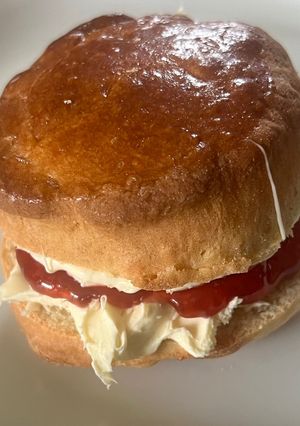
Devonshire Scones

It’s scone as in ‘gone’, not scone as in ‘bone’ ~ YouGov poll, 2016
The great scone schism is one of the many regional and social divisions in the history of Britain’s cakes, buns and biscuits and what we call them.
The sun is making brief appearances through the clouds and the trees are suddenly covered in leaves once again. Time to make cucumber sandwiches and a batch of scones. Quintessentially English and associated with afternoon tea, not to be confused with high tea.
Afternoon tea is elegant and light and served around 4 pm while high tea is a hearty 5–7 pm working-class evening meal featuring savory meats and pies and often called supper.
Scones originated in Scotland in the early 1500s, initially as flat, oat-based griddle cakes called bannocks. They evolved into oven-baked, fluffy treats with the introduction of baking powder in the 19th century, becoming a staple of British afternoon tea popularized by Anna, Duchess of Bedford, wishing to have a light snack between lunch and dinner.
Queen Victoria popularised the tradition of eating scones with clotted cream and jam during her afternoon tea, enhancing their popularity in high society.
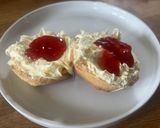
The debate for the correct order for cream and jam on a scone is a famous regional dispute, often referred to as the ‘cream tea controversy’. In Cornwall it’s jam topped with clotted cream and in Devon cream topped with jam but one must never put either on a fruit scone, it’s a capital offence! #CookpadApron2026
Devonshire Scones
It’s scone as in ‘gone’, not scone as in ‘bone’ ~ YouGov poll, 2016
The great scone schism is one of the many regional and social divisions in the history of Britain’s cakes, buns and biscuits and what we call them.
The sun is making brief appearances through the clouds and the trees are suddenly covered in leaves once again. Time to make cucumber sandwiches and a batch of scones. Quintessentially English and associated with afternoon tea, not to be confused with high tea.
Afternoon tea is elegant and light and served around 4 pm while high tea is a hearty 5–7 pm working-class evening meal featuring savory meats and pies and often called supper.
Scones originated in Scotland in the early 1500s, initially as flat, oat-based griddle cakes called bannocks. They evolved into oven-baked, fluffy treats with the introduction of baking powder in the 19th century, becoming a staple of British afternoon tea popularized by Anna, Duchess of Bedford, wishing to have a light snack between lunch and dinner.
Queen Victoria popularised the tradition of eating scones with clotted cream and jam during her afternoon tea, enhancing their popularity in high society.
The debate for the correct order for cream and jam on a scone is a famous regional dispute, often referred to as the ‘cream tea controversy’. In Cornwall it’s jam topped with clotted cream and in Devon cream topped with jam but one must never put either on a fruit scone, it’s a capital offence! #CookpadApron2026
 Open in Cookpad App
Steps
- 1
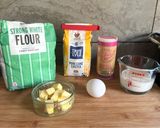
Preheat the oven to 200°C fan. Lightly grease a baking tray with butter and line it with baking paper.
- 2
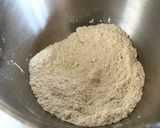
Put 225 g flour into a large bowl and add the butter. Rub the flour and butter together with your fingers to create a breadcrumb-like mixture.
- 3
Add the sugar, eggs and baking powder and use a spoon to turn the mixture gently. Make sure you mix all the way down to the bottom and incorporate all of the ingredients.
- 4
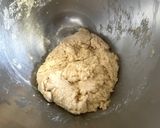
Now add half of the milk and keep turning the mixture gently with the spoon to combine. Then add the remaining milk a little at a time and bring everything together to form a very soft, sticky dough. Note: may not need to add all of the milk.
- 5
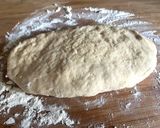
Sprinkle most of the remaining flour onto a clean work surface. Tip the soft dough out onto the work surface and sprinkle the rest of the flour on top. The mixture will be wet and sticky.
- 6
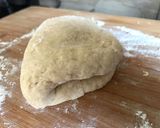
Fold the dough in half, then turn the dough 90 degrees and repeat. By folding and turning the mixture in this way (called chaffing) the last of the flour will be incorporated. Do this a few times until a smooth dough is formed. If the mixture becomes too sticky use some extra flour to coat the mixture. Be careful not to overwork the dough.
- 7
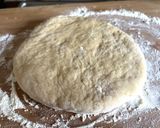
Sprinkle flour onto the work surface and the top of the dough, then use the rolling pin to roll up from the middle and then down from the middle. Turn the dough by 90 degrees and continue to roll until it’s about 2.5 cm thick. Relax the dough slightly by lifting the edges and allowing the dough to drop back onto the work surface.
- 8
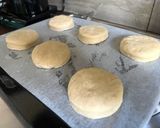
Using a non-fluted pastry cutter, stamp out rounds from the pastry and place them onto the baking tray. Dip the edge of the pastry cutter in flour to make it easier to cut out the scones without them sticking. Don’t twist the cutter – just press firmly, then lift it up and push the dough out. Roll up any remaining dough and cut out the final scones. If you don’t have a pastry cutter, square up the dough and cut into 6 equal squares.
- 9
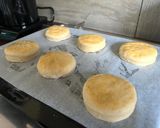
Place the scones on the baking tray and leave them to rest for a few minutes to let the baking powder work. Then use a pastry brush to glaze them with the beaten egg and salt mixture. Be careful to keep the glaze on the top of the scones because if it runs down the sides it will stop them rising evenly. Leave for 5 minutes then brush again with egg wash.
- 10
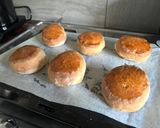
Bake the scones in the middle of the oven for 15 minutes, or until the scones have risen and golden-brown. Leave the scones to cool, then split in half and top with clotted cream and jam.
Tips
Strong white flour seems to hold the scones together better but it’s fine to use plain flour.
Made this recipe? Share a Cooksnap!
Let Laura know how it turned out.
Nothing says thank you like a photo!

Someone made your recipe and shared a Cooksnap!

Similar Recipes
More Recipes
-


-
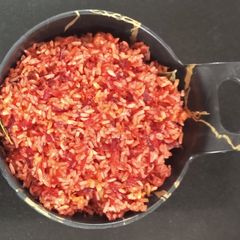
Nourishing and Colourful Beetroot Gajar Pulav

-
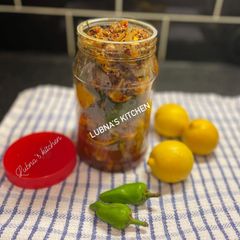
🌶️🍋🧅Instant Green Chilli,Onion & Lemon Pickle:

-

-

-

-

-

-
Pecan Crusted Chicken with Hot Honey Butter

-
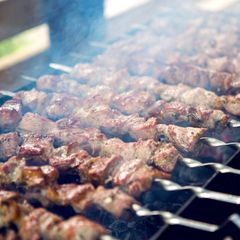
UAE-Style Citrus Yogurt Beef Kebabs

-
UAE-Style Citrus Yogurt Beef Kebabs
-

-

-

-
-

-
Pecan Crusted Chicken with Hot Honey Butter
-






Comments (2)