

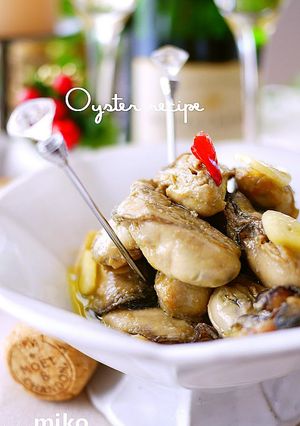
Shiso-Scented Oysters Marinated in Oil

I've been making this every year for more than a decade. I've experimented with various methods in the past, but this is the one I use now.
The seasoning ingredients are very simple, so the taste is dependent on their quality.
I've been using the same sauce that I am able to get easily in recent years. (See the Step 19 photo.)
I recommend using a non-stick frying pan to which the oysters won't stick and burn.
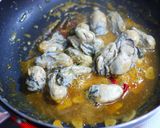
In Step 12, some of the umami from the oysters will stick to the pan, but just leave any lumps as-is. Don't try to scrape them off too hard and mix them back with the oysters. The burnt bits that stick to the pan are full of umami, but its also burnt sauce, so it will make the oysters taste bitter. Recipe by putimiko
Shiso-Scented Oysters Marinated in Oil
I've been making this every year for more than a decade. I've experimented with various methods in the past, but this is the one I use now.
The seasoning ingredients are very simple, so the taste is dependent on their quality.
I've been using the same sauce that I am able to get easily in recent years. (See the Step 19 photo.)
I recommend using a non-stick frying pan to which the oysters won't stick and burn.
In Step 12, some of the umami from the oysters will stick to the pan, but just leave any lumps as-is. Don't try to scrape them off too hard and mix them back with the oysters. The burnt bits that stick to the pan are full of umami, but its also burnt sauce, so it will make the oysters taste bitter. Recipe by putimiko
 Open in Cookpad App
Steps
- 1
Put the raw shucked oysters in a bowl, and add salt or katakuriko. Gently rub them with the salt or katakuriko to wash their surfaces, taking care not to smush them. Rinse under running water.
- 2
You can wash the oysters with grated daikon radish instead. Use whichever method you usually use.
- 3
Drain off the water, sprinkle with some sake (not listed in the ingredients) and then drain into a sieve with a bowl underneath. You can do everything up to this point in advance, and put the bowl and sieve in the refrigerator...
- 4
...which lets the excess moisture drain off the oysters into the bowl so they aren't watery. If you're in a hurry, you can just wash them and proceed. Slice the garlic.
- 5
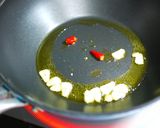
Put the oil in a frying pan and heat with half the garlic to bring out their fragrance. If you want to make it spicy, add a de-seeded red chili pepper.
- 6
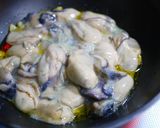
Add the oysters and heat through.
- 7
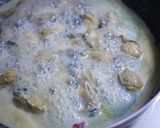
The moisture in the oysters will bubble up right away. Add the white wine and cook off the alcohol.
- 8
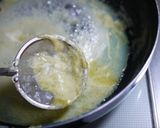
When the oysters are cooked through, take them out so that don't shrink. (Make sure to put a bowl under the sieve.) If there is any scum, skim it off completely.
- 9
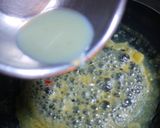
Return the liquid that drained off the oysters into the bowl back to the frying pan. It has lots of umami so don't forget to add it back!
- 10
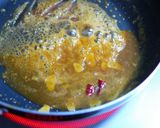
Add the oyster sauce to the pan. Simmer to reduce.
- 11
When the liquid in the pan has reduced a bit, put the oysters back in. Shake the frying pan to coat the oysters with the sauce. Be careful not to let them burn.
- 12
Just before all the moisture in the pan has cooked off, add the soy sauce. Roll the oysters around, then take the pan off the heat. It will have a wonderful smell from the soy sauce. (Use ki-joyu (raw unpasteurized soy sauce) if possible.)
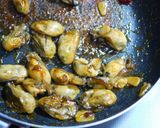
- 13
Put the oysters in a container, add the remaining uncooked half of the garlic, and pour extra virgin olive oil over all. Add the bay leaves and black peppercorns too for extra flavor.
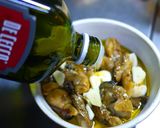
- 14
I also add a red chili pepper. For this amount, it's not worth packing into jars since it's all gone the next day. If you make a large batch and and to preserve it, see the next step.

- 15
Put the oysters in a clean jar, and add enough extra virgin olive oil to cover them, together with the ★ ingredients. The oysters will keep for 2 to 3 weeks in the refrigerator if they are completely immersed in oil.
- 16
Make sure to refrigerator them. I've never had any left over for longer than 2-3 weeks so I don't know how much longer they'd keep, but I recommend finishing them within 2 weeks.
- 17
The oil will solidify in the refrigerator, but will return to its liquid state if you leave it out for a little while at room temperature.
- 18
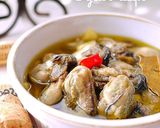
The oysters are not simmered for very long so they don't shrink much. They stay filled with their umami and plump. Since they're tossed with the sauce just at the very end, they taste very light and elegant.
- 19
They taste great eaten the same day, but are even better the next day when the oil and oysters have melded. The remaining oil can be used in various recipes, so please use it all up.
- 20
After being marinated for a few days, the oysters become very mild in flavor (because the flavor gets transferred to the oil). If they seem too bland to you, add a little rock salt to them.
- 21
I always use extra virgin olive oil for this, but if you don't like olive oil you can try grapeseed oil or vegetable oil.
- 22
Raw oysters go bad very fast, so if you use large frozen shucked oysters, you can enjoy their texture. I used frozen oysters in the photos for this recipe.
- 23
If you are using frozen oysters for this recipe, it's best to defrost them and clean them as described, rather than sautéing them while they're still frozen.
Cooksnaps

Did you know that you can import recipes from anywhere into Cookpad with one click?
https://blog.cookpad.com/us/cookpad-recipe-import-feature-save-recipes-from-anywhere/
Download Cookpad app to plan your meals and store your cooking ideas in one safe place! https://cookpad.wasmer.app/us/download
People also looked for

Keywords
Similar Recipes
More Recipes
-


-

-

-

-

-

-
-


-

-


-

Super delicious buttermilk biscuits

-


-

Double delight strawberry cake

-


-
Better than KFC!? Spicy Chicken

-
Moist Chestnut Cake with Browned Butter
-

Shimajiro Rice (with an egg-free version)
-
-

-





Comments