CookpadCookpad
Guest
Register or Log In
Save and create recipes, send cooksnaps and more
  • Search
  • Premium
    • Top Cooksnapped Recipes
    • Top Viewed Recipes
  • Premium
  • Challenges
  • FAQ
  • Send Feedback
  • Region
  • Your Collection
Your Collection
To start creating your recipe library, please register or login.
Biangbiang mian/noodles (handpulled noodles)
Save this recipe to come back to it later.
  • Add Cooksnap
  • Add to folders
  • Print
  • Share
    • Copied!
    • Email
    • Facebook
    • Pin it
    • Twitter
  • Report Recipe
  • See report
  • Edit recipe
  • Delete
CookpadCookpad
A picture of Biangbiang mian/noodles (handpulled noodles).

Biangbiang mian/noodles (handpulled noodles)

Nadine Schweitzer
Nadine Schweitzer @deanyeatsworld

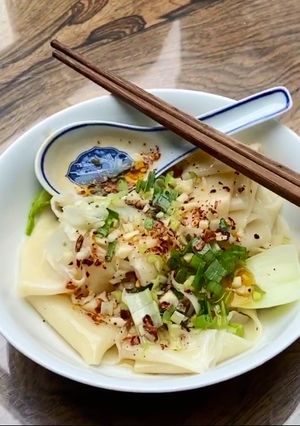
Biangbiang noodles are popular in the cuisine of China's Shaanxi Province. Due to the thickness and length of the noodle, they are described as being like a belt.

The noodles are broad and handmade. It was originally part of a poor man's meal in the countryside. However, they have since become very popular. The word biang comes from the sound made by the chef, when the noodles are created through pulling and slapping them on the surface.

My husband and I used to eat this whenever we had a craving for these kind of noodles. These noodles can be topped up with various toppings. I like mine with sesame paste sauce but it can also be topped with the the hot oil and various garnishes or be served in a beef brisket stew. All variations are simply delicious.

However during lockdown, we were unable to go and fullfill our craving so hubby challenged me to learn this.

Here is my version and take on Biangbiang noodles adapted from trying out many other Biangbiang recipes. This has now become a regular in our household. The best thing about the dish is that it also gets the family involved. I make the dough and my nieces help with making and pulling the noodles. My husband does the hot oil part and garnish.

I hope you enjoy making and eating it as much as we do.

#mycookbook
#biangbiangmian
#biangbiangnoodles
#handpullednoodles
#Chinese
#Chinesecuisine
#week19
#mycookbookproject

Biangbiang noodles are popular in the cuisine of China's Shaanxi Province. Due to the thickness and length of the noodle, they are described as being like a belt.

The noodles are broad and handmade. It was originally part of a poor man's meal in the countryside. However, they have since become very popular. The word biang comes from the sound made by the chef, when the noodles are created through pulling and slapping them on the surface.

My husband and I used to eat this whenever we had a craving for these kind of noodles. These noodles can be topped up with various toppings. I like mine with sesame paste sauce but it can also be topped with the the hot oil and various garnishes or be served in a beef brisket stew. All variations are simply delicious.

However during lockdown, we were unable to go and fullfill our craving so hubby challenged me to learn this.

Here is my version and take on Biangbiang noodles adapted from trying out many other Biangbiang recipes. This has now become a regular in our household. The best thing about the dish is that it also gets the family involved. I make the dough and my nieces help with making and pulling the noodles. My husband does the hot oil part and garnish.

I hope you enjoy making and eating it as much as we do.

#mycookbook
#biangbiangmian
#biangbiangnoodles
#handpullednoodles
#Chinese
#Chinesecuisine
#week19
#mycookbookproject

Read more

Biangbiang mian/noodles (handpulled noodles)

Nadine Schweitzer
Nadine Schweitzer @deanyeatsworld

Biangbiang noodles are popular in the cuisine of China's Shaanxi Province. Due to the thickness and length of the noodle, they are described as being like a belt.

The noodles are broad and handmade. It was originally part of a poor man's meal in the countryside. However, they have since become very popular. The word biang comes from the sound made by the chef, when the noodles are created through pulling and slapping them on the surface.

My husband and I used to eat this whenever we had a craving for these kind of noodles. These noodles can be topped up with various toppings. I like mine with sesame paste sauce but it can also be topped with the the hot oil and various garnishes or be served in a beef brisket stew. All variations are simply delicious.

However during lockdown, we were unable to go and fullfill our craving so hubby challenged me to learn this.

Here is my version and take on Biangbiang noodles adapted from trying out many other Biangbiang recipes. This has now become a regular in our household. The best thing about the dish is that it also gets the family involved. I make the dough and my nieces help with making and pulling the noodles. My husband does the hot oil part and garnish.

I hope you enjoy making and eating it as much as we do.

#mycookbook
#biangbiangmian
#biangbiangnoodles
#handpullednoodles
#Chinese
#Chinesecuisine
#week19
#mycookbookproject

Biangbiang noodles are popular in the cuisine of China's Shaanxi Province. Due to the thickness and length of the noodle, they are described as being like a belt.

The noodles are broad and handmade. It was originally part of a poor man's meal in the countryside. However, they have since become very popular. The word biang comes from the sound made by the chef, when the noodles are created through pulling and slapping them on the surface.

My husband and I used to eat this whenever we had a craving for these kind of noodles. These noodles can be topped up with various toppings. I like mine with sesame paste sauce but it can also be topped with the the hot oil and various garnishes or be served in a beef brisket stew. All variations are simply delicious.

However during lockdown, we were unable to go and fullfill our craving so hubby challenged me to learn this.

Here is my version and take on Biangbiang noodles adapted from trying out many other Biangbiang recipes. This has now become a regular in our household. The best thing about the dish is that it also gets the family involved. I make the dough and my nieces help with making and pulling the noodles. My husband does the hot oil part and garnish.

I hope you enjoy making and eating it as much as we do.

#mycookbook
#biangbiangmian
#biangbiangnoodles
#handpullednoodles
#Chinese
#Chinesecuisine
#week19
#mycookbookproject

Read more
Saved
Save this recipe to come back to it later.
Edit recipe
See report
Add to folders
Add CooksnapAdd Cooksnap
ShareShare
  • Copied!
  • Email
  • Facebook
  • Pin it
  • Twitter
PrintPrint
  • PrintPrint
  • Add CooksnapAdd Cooksnap
  • Report Recipe
  • See report
  • Delete
Share
  • Copied!
  • Email
  • Facebook
  • Pin it
  • Twitter
Save this recipe to come back to it later.
  • Add Cooksnap
  • Add to folders
  • Print
  • Report Recipe
  • See report
  • Edit recipe
  • Delete

Ingredients

4 servings
  • For the noodle dough:
  • 300 gpasta or plain flour
  • 1/4 teaspoonsalt (use more or less depending on preference)
  • 130 mlwater (use more or less depending on flour)
  • Oil for coating noodles:
  • 1/4 cupvegetable oil, to coat the fresh noodles (use more or less depending on quantity of noodle)
  • Cooking the noodles:
  • 5 cups(boiled kettle water)
  • 1/3 cupwater, cold
  • Blanching the vegetable:
  • 2pak choi, stems into wide strips and leaves into finer strips
  • Assembling the noodles:
  • 2garlic clove, finely minced or grated
  • 1-2spring onion, finely sliced
  • 1-2 teaspoonschili powder
  • pinchsalt, for each serving
  • 2-3 teaspoonslight soy sauce serving (add more or less depending on preference)
  • 1-2 tablespoonsblack rice vinegar per serving (add more or less depending on preference)
  • Hot oil:
  • 2-3 tablespoonsvegetable cooking oil, per serving
Cookpad Open in Cookpad App
Saved
Save this recipe to come back to it later.

Steps

  1. 1

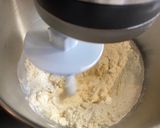
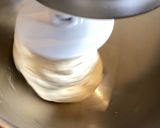
    To make the noodle dough in a large bowl, mix salt with flour. Then add water and stir bit by bit. Using either an electric mixer with a dough hook attachment to mix or if by hand using chopsticks. Tip: add the required water amount first to see whether the dough forms and is kneadable. If not add a tiny drop more water at a time until the dough forms a ball.
    A picture of step 1 of Biangbiang mian/noodles (handpulled noodles).
    A picture of step 1 of Biangbiang mian/noodles (handpulled noodles).
  2. 2

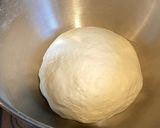
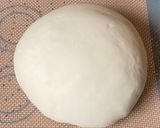
    Continue kneading the dough until smooth. Cover the noodle dough with cling film and let it rest for 20 minutes.
    A picture of step 2 of Biangbiang mian/noodles (handpulled noodles).
    A picture of step 2 of Biangbiang mian/noodles (handpulled noodles).
  3. 3

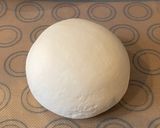
    Then after 20 minutes knead the dough again, until the surface is really smooth. This will make the dough easier to work with later and make it very pliable when stretching the dough to make the noodles. Cover the dough again with cling film and let it rest for another 20 minutes.
    A picture of step 3 of Biangbiang mian/noodles (handpulled noodles).
  4. 4

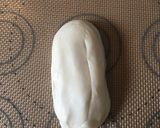
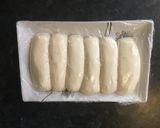
    In a small bowl pour the vegetable oil. In a medium size baking tray lightly coat and brush with vegetable oil. Remove the noodle dough from the mixing bowl and place on a chopping board. Weigh the dough and cut into two equal halves. Using the first half of the dough cut the dough into 6 portions, cover the other half with cling film (to prevent it drying out). There will be 12 noodle logs in total.
    A picture of step 4 of Biangbiang mian/noodles (handpulled noodles).
    A picture of step 4 of Biangbiang mian/noodles (handpulled noodles).
    A picture of step 4 of Biangbiang mian/noodles (handpulled noodles).
  5. 5

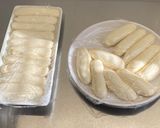
    Shape each one portion into a long log and brush all over with oil. Repeat the process for the second half of the dough. Once all the noodle dough have been shaped and oiled, cover with cling film. Let the noodle log rest for at least 1 hour or until ready to use. Tip: If making the noodles in advance put the noodle log into the fridge and take out an hour before use to let the noodles come to room temperature.
    A picture of step 5 of Biangbiang mian/noodles (handpulled noodles).
  6. 6

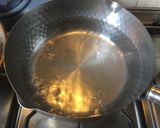
    In a large saucepan pour in the boiled water. On medium heat, bring water to a boil. In the meantime take one noodle log out and place it on a clean flat surface or on a large silicone mat.
    A picture of step 6 of Biangbiang mian/noodles (handpulled noodles).
  7. 7

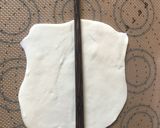
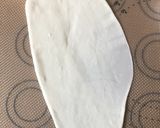
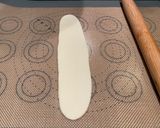
    Flatten it and using a rolling pin roll out side ways to make the dough wider (make it as wider as per preference) and then roll out into a wide rectangle. Using chopsticks press it into the middle of the dough to indent it. Tip: this makes it easier to separate the noodles later.
    A picture of step 7 of Biangbiang mian/noodles (handpulled noodles).
    A picture of step 7 of Biangbiang mian/noodles (handpulled noodles).
    A picture of step 7 of Biangbiang mian/noodles (handpulled noodles).
  8. 8

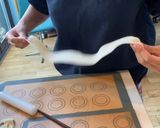
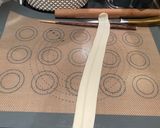
    Then gripping and holding the two ends of the noodle strip slam the noodle dough against the silicone board flat surface This creates the smacking sound. While smacking the noodle dough slightly stretch it during the smashing process. This will make the noodles long. Tip: stretch out the noodles slowly to prevent breakage.
    A picture of step 8 of Biangbiang mian/noodles (handpulled noodles).
    A picture of step 8 of Biangbiang mian/noodles (handpulled noodles).
  9. 9

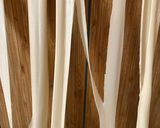
    Once noodles are at desired length, separate noodles along from the chopstick trace. Tip: separate the noodles all the way to have two noodle pieces or partially separate but don't rip one end to have one long noodle. Repeat the process until you have the desired amount for that portion. I usually cook 6 strands at a time. Then separate noodles per portion in the bowls. Tip: If making it for a large family double the portion size. Have two pots of water on the go so you can cook more at once.
    A picture of step 9 of Biangbiang mian/noodles (handpulled noodles).
  10. 10

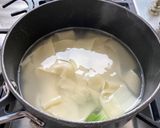
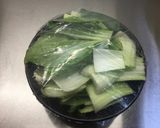
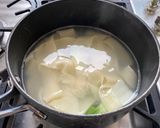
    Go back to the pot of boiling water and add the stems of the pak choi. Once they are half way cooked, add in the noodles. Once water boils again add cold water. And then add the leaves of the pak choi to blanch. Once noodles are cooked transfer the noodles and vegetables into a bowl.
    A picture of step 10 of Biangbiang mian/noodles (handpulled noodles).
    A picture of step 10 of Biangbiang mian/noodles (handpulled noodles).
    A picture of step 10 of Biangbiang mian/noodles (handpulled noodles).
  11. 11

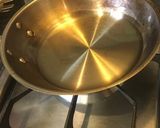
    In the meantime, on medium to high heat in a pan or pot add 2 vegetable oil and heat it up until slightly smoky (this makes 1 serving). Turn off the heat.
    A picture of step 11 of Biangbiang mian/noodles (handpulled noodles).
  12. 12

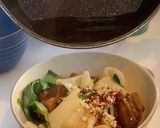
    Then place as little or as much of the garlic, green onion and chilli powder on top on top of the noodles and pour the hot oil over the noodles (mainly over garlic, spring onions and chilli powder). Lastly, add soy sauce and black vinegar and mix well. Repeat process 6 to 12 for the remaining servings.
    A picture of step 12 of Biangbiang mian/noodles (handpulled noodles).
  13. 13

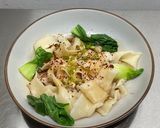
    Eat and serve immediately while the noodles are pipping hot. Tip: this batch should make enough for anyone that fancies a second round of biang biang noodles.
    A picture of step 13 of Biangbiang mian/noodles (handpulled noodles).
Saved
Save this recipe to come back to it later.
Edit recipe
See report
Add to folders
Add CooksnapAdd Cooksnap
ShareShare
  • Copied!
  • Email
  • Facebook
  • Pin it
  • Twitter
PrintPrint
  • PrintPrint
  • Add CooksnapAdd Cooksnap
  • Report Recipe
  • See report
  • Delete

Cooksnaps

Saved
Save this recipe to come back to it later.
  • Add Cooksnap
  • Add to folders
  • Print
  • Share
    • Copied!
    • Email
    • Facebook
    • Pin it
    • Twitter
  • Report Recipe
  • See report
  • Edit recipe
  • Delete

Copied!

Nadine Schweitzer
Nadine Schweitzer @deanyeatsworld
on September 28, 2020 10:43
👩🏻‍💼My name is Deany👩🏻‍🍳 Homecook🇬🇧 Cookpad Ambassador📍🇬🇧🍴Loves to eat & cook food at homeBe creative, experiment and come up with new foodie ideasInspire others with my recipes and share my passion for food🍽📝my recipes from around the 🌍Quote: "Food from the heart".Follow me for daily cooking and eating updates on my Instagram:👇🏼https://www.instagram.com/DeanyEatsWorld/
Read more

Comments (5)

Maggie's Kitchen
Maggie's Kitchen @cook_24802316
September 28, 2020 20:07
Wooh this is so creative.
Guest
Add a comment
0/0

Similar Recipes

More Recipes

  1. A picture of Aadi Thengai 🥥 Paal Payasam.

    Aadi Thengai 🥥 Paal Payasam

    Padmini Venkatesan Padmini Venkatesan
  2. A picture of Moong Dal Khichdi.

    Moong Dal Khichdi

    Ankita Kapil Varshney Ankita Kapil Varshney
  3. A picture of Quick Shōyu Ramen (醤油ラーメン).

    Quick Shōyu Ramen (醤油ラーメン)

    Francesco Francesco
  4. A picture of Rice and Sevayan Kheer.

    Rice and Sevayan Kheer

    Nargis shaikh Shaukat Nargis shaikh Shaukat
  5. A picture of Poha Paneer Tikki | High-Protein Breakfast & Tea-Time Snack.

    Poha Paneer Tikki | High-Protein Breakfast & Tea-Time Snack

    Rosalyn John Rosalyn John
  6. A picture of Francesco’s Crying Tiger Pork Chop.

    Francesco’s Crying Tiger Pork Chop

    Francesco Francesco
  7. A picture of No Bake Orange Fluff Dessert.

    No Bake Orange Fluff Dessert

    cindybear cindybear
  8. A picture of Malabar Fish Curry with Coconut Milk | Kerala-Style Meen Curry.

    Malabar Fish Curry with Coconut Milk | Kerala-Style Meen Curry

    Rosalyn John Rosalyn John
  9. A picture of Vegetable Couscous.

    Vegetable Couscous

    Bianca Mwale Bianca Mwale
  10. A picture of Karela with Chicken 🐥.

    Karela with Chicken 🐥

    Kulsoom Bukhari Kulsoom Bukhari
  11. A picture of Red Braised Chicken Thighs.

    Red Braised Chicken Thighs

    蛟龍Stormwyrm 蛟龍Stormwyrm
  12. A picture of Sea Salt Almond Seed Bars(No Bake, Vegan, Dairy Free).

    Sea Salt Almond Seed Bars(No Bake, Vegan, Dairy Free)

    Gem Gem
  13. A picture of Chicken Spinach Mushroom Bake.

    Chicken Spinach Mushroom Bake

    Lauren Lauren
  14. A picture of Japanese Steak Rice Bowl.

    Japanese Steak Rice Bowl

    asalim asalim
  15. A picture of Chicken Ala Kfc.

    Chicken Ala Kfc

    Meme Meme
  16. A picture of Eggplant 🍆 with garlic and vinegar 😋.

    Eggplant 🍆 with garlic and vinegar 😋

    SABA SABA
  17. A picture of Atta(wheat flour) Sirini.

    Atta(wheat flour) Sirini

    Anjali Behera Anjali Behera
  18. A picture of Cheesy-sesame bread sticks.

    Cheesy-sesame bread sticks

    Naheed Alam Naheed Alam
  19. A picture of Baingan da Bharta.

    Baingan da Bharta

    Richa Sarin Richa Sarin
  20. A picture of Water melon juice.

    Water melon juice

    Uzma Syed Uzma Syed
  21. A picture of Clubsandwich🥪.

    Clubsandwich🥪

    Amna Faisal Amna Faisal
  22. A picture of Nuggets🍗🍗.

    Nuggets🍗🍗

    Amna Faisal Amna Faisal
  23. A picture of Apple Dessert.

    Apple Dessert

    Gull E Shah Gull E Shah
  24. A picture of Aloo bhara Paratha.

    Aloo bhara Paratha

    Sadaf Salman Sadaf Salman
  25. A picture of Crispy baked tofu with roasted vegetables and peanut butter sauce.

    Crispy baked tofu with roasted vegetables and peanut butter sauce

    Yodaga Yodaga
https://cookpad.wasmer.app/us/recipes/12637632
Cookpad Open in Cookpad App

About Us

Our mission at Cookpad is to make everyday cooking fun, because we believe that cooking is key to a happier and healthier life for people, communities and the planet. We empower home cooks all over the world to help each other by sharing their recipes and cooking experiences.

Subscribe to Premium for exclusive features & benefits!

Cookpad Communities

🇺🇸 United States 🇬🇧 United Kingdom 🇪🇸 España 🇦🇷 Argentina 🇺🇾 Uruguay 🇲🇽 México 🇨🇱 Chile 🇻🇳 Việt Nam 🇹🇭 ไทย 🇮🇩 Indonesia 🇫🇷 France 🇸🇦 السعودية 🇹🇼 臺灣 🇮🇹 Italia 🇮🇷 ایران 🇮🇳 India 🇭🇺 Magyarország 🇳🇬 Nigeria 🇬🇷 Ελλάδα 🇲🇾 Malaysia 🇵🇹 Portugal 🇺🇦 Україна 🇯🇵 日本 See All

Learn More

Cookpad Premium Careers Feedback Blog Terms of Service Community Guidelines Privacy Policy Frequently Asked Questions

Download our app

Open Cookpad App on Google Play Open Cookpad App on App Store
Copyright © Cookpad Inc. All Rights Reserved
close