

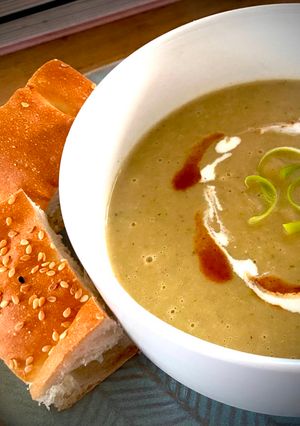
Ugly Duckling Soup

Celeriac has been described as the ugly duckling of the vegetables world due to its gnarly roots and beigeness but it is a sheep in wolves clothing. Not only is it super nutritious but it gives a fabulous taste to cooking liquids and absorbs the flavours of other ingredients so it’s ideal for soups and casseroles.
This Mediterranean root is of a particular variety of celery plant and belongs to the same plant family as carrots. The early Greeks called it selinon and it is mentioned in Homer's The Iliad and The Odyssey in 800 BCE, but celeriac did not become an important vegetable until the Middle Ages. It was grown as a medicinal crop in some early civilisations as it contains a plant compound called apigenin which is an anti-inflammatory agent and was only recorded as a food plant in France in 1623.
Larder and fridge raided of leftovers and I’ve found Jerusalem artichoke, spring and white onion, garlic, kefir, parsley and chamoy for a fruity, warming kick.
Chamoy is a saucy condiment often found on street vendors carts in Mexico and used to flavour snacks. It’s made from brined and pickled fruit, chilli and lime juice and is sweet yet savoury, tangy and spicy and ideal for lifting the earthiness of the root vege.
Big bowl of soup, less than a 100 calories and packed full of essential vitamins and minerals, prebiotics/probiotics, fibre and antioxidants to build one’s immune system in the winter months. Serve with a chunk of bread.
Ugly Duckling Soup
Celeriac has been described as the ugly duckling of the vegetables world due to its gnarly roots and beigeness but it is a sheep in wolves clothing. Not only is it super nutritious but it gives a fabulous taste to cooking liquids and absorbs the flavours of other ingredients so it’s ideal for soups and casseroles.
This Mediterranean root is of a particular variety of celery plant and belongs to the same plant family as carrots. The early Greeks called it selinon and it is mentioned in Homer's The Iliad and The Odyssey in 800 BCE, but celeriac did not become an important vegetable until the Middle Ages. It was grown as a medicinal crop in some early civilisations as it contains a plant compound called apigenin which is an anti-inflammatory agent and was only recorded as a food plant in France in 1623.
Larder and fridge raided of leftovers and I’ve found Jerusalem artichoke, spring and white onion, garlic, kefir, parsley and chamoy for a fruity, warming kick.
Chamoy is a saucy condiment often found on street vendors carts in Mexico and used to flavour snacks. It’s made from brined and pickled fruit, chilli and lime juice and is sweet yet savoury, tangy and spicy and ideal for lifting the earthiness of the root vege.
Big bowl of soup, less than a 100 calories and packed full of essential vitamins and minerals, prebiotics/probiotics, fibre and antioxidants to build one’s immune system in the winter months. Serve with a chunk of bread.
 Open in Cookpad App
Steps
- 1
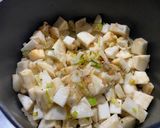
Melt the butter in a pan and add the onion. Cook until soft, then add the garlic and salt and cook for a further 2 minutes. Add the root vegetables, chamoy, water, parsley (reserving 2 tbsps) and bring to the boil. Turn down the heat and simmer until the vegetables are soft.

- 2
Add the remaining parsley, kefir and blitz. Check the seasoning. Serve with a swirl of chamoy and kefir, a squeeze of lime and a chunk of bread.




Similar Recipes
More Recipes
-


-


-


-


-

Idris style Lucknowi Chicken Biryani

-

Desi Pau Bhaji Meets Italian Pasta

-


-

-


-


-


-


-

-


-


-

-


-


-


-

-
Grandma's palm oil rice and beans








Comments