

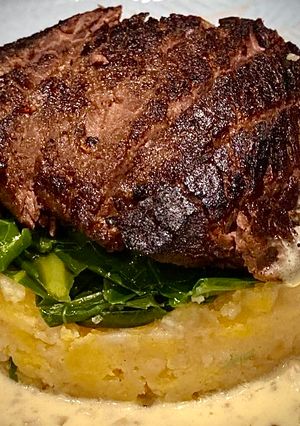
Orcadian Clapshot and Ostrich

Clapshot is a side dish that originated in Arcaibh (Orkney Islands), an archipaelago in the Northern Isles of Scotland. The soil, moist conditions and cool climate of the islands are ideal for growing the best neeps and tatties.
There is much chatter as to whether a neep is a swede or a turnip. The turnip originated in central and southern Europe and the Roman scholar Pliny the Elder (23-79 CE) regarded it as an important vegetable, helping stave off famine. The swede was developed much later in Bohemia in the 17th century as a result of a cross between a turnip and a wild cabbage. In the US it is called a rutabaga, deriving from the Swedish word rotabagge meaning ‘thick root’. It is said that King Gustav of Sweden sent the first swede seeds as a gift to Patrick Miller in Dumfries & Galloway in the 18th century, hence it being known as a ‘swede’. Swedes are hardier than turnips, have a tougher skin and yellow flesh.
Clapshot consists of one third neeps to tatties flavoured with dripping and seasoned with salt and pepper. It is thought the name clapshot comes from the noise of the masher in the saucepan being reminiscent of gunfire.
Ostrich is a sustainable alternative to beef, is leaner than chicken as it is 97% fat-free, low in cholesterol, high in iron and a great source of protein. It has the texture of beef but a delicate, gamey flavour like mousse and balances the dripping in the clapshot. Serve with black pudding crumb and a side of velvety whisky sauce.
Orcadian Clapshot and Ostrich
Clapshot is a side dish that originated in Arcaibh (Orkney Islands), an archipaelago in the Northern Isles of Scotland. The soil, moist conditions and cool climate of the islands are ideal for growing the best neeps and tatties.
There is much chatter as to whether a neep is a swede or a turnip. The turnip originated in central and southern Europe and the Roman scholar Pliny the Elder (23-79 CE) regarded it as an important vegetable, helping stave off famine. The swede was developed much later in Bohemia in the 17th century as a result of a cross between a turnip and a wild cabbage. In the US it is called a rutabaga, deriving from the Swedish word rotabagge meaning ‘thick root’. It is said that King Gustav of Sweden sent the first swede seeds as a gift to Patrick Miller in Dumfries & Galloway in the 18th century, hence it being known as a ‘swede’. Swedes are hardier than turnips, have a tougher skin and yellow flesh.
Clapshot consists of one third neeps to tatties flavoured with dripping and seasoned with salt and pepper. It is thought the name clapshot comes from the noise of the masher in the saucepan being reminiscent of gunfire.
Ostrich is a sustainable alternative to beef, is leaner than chicken as it is 97% fat-free, low in cholesterol, high in iron and a great source of protein. It has the texture of beef but a delicate, gamey flavour like mousse and balances the dripping in the clapshot. Serve with black pudding crumb and a side of velvety whisky sauce.
 Open in Cookpad App
Steps
- 1
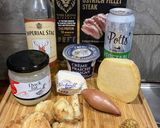
Clapshot: If not using leftover roasties, peel the tatties and cut into good sized pieces and add to a pan of cold water. Bring the tatties to the boil, cover and simmer for 15-20 minutes until just soft when pierced with a sharp knife.
Peel the neep, then cut into chunks and simmer for 15-20 mins until just soft.
- 2
Black pudding: Place the slices in a dry skillet and as they begin to cook, break up with a wooden spoon, so left with a crumbly mix with large and small lumps. Cook through for 4-5 minutes. Remove residual fat (to be used later) and set aside the black pudding.
- 3
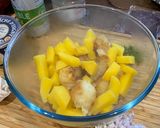
Clapshot: When the neeps (and tatties) are cooked, drain and leave to steam for 5 minutes to help get rid of any excess water. Mash the tatties over low heat then add the neeps and mash again. Do not over mash as need to be able to see flecks of the turnip. Stir through a generous knob of dripping, a grating of nutmeg, half of the chives, tot of whisky and season generously with freshly ground salt and black pepper. Cover and set aside.
- 4
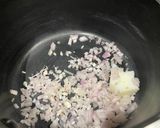
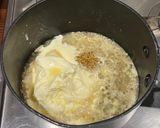
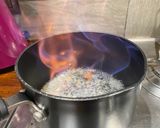
Whisky sauce: Heat a small pan, add a knob of lard and the shallot and cook until translucent. Add 1 tbps of whisky then carefully light the pan to allow the alcohol to burn off. When the flame is out, stir in the crème fraîche, stock and mustards. Whisk in the cornflour. Allow to thicken and reduce on a low heat for 1 -2 minutes whilst continuing to stir. Season with salt and white pepper. Add another tablespoon of whisky, cover and set aside to keep warm.
- 5
Ostrich: Add the fat leftover from frying the black pudding to a skillet over medium heat. Add the ostrich steaks and cook for 3 minutes on each side, then let them rest and carve. (As a vegetarian option, replace the black pudding with vegetarian haggis and poach duck eggs until the white is just cooked).
- 6
Spring cabbage: remove the stalks, slice and steam for 2 minutes. Season.
- 7
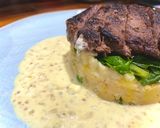
Place a dollop of clapshot on each plate, sprinkle with the black pudding crumb, place a spoon of spring cabbage on top then the carved ostrich steak. Serve the whisky sauce on the side.

Similar Recipes
More Recipes
-

-


-

-
Japanese Simmered Dried Daikon

-
Raw mango and string candy chutney

-

-

 Garima Mayur Mangwani
 -

-
Delicious nutritious healthy Apple dry fruit smoothi

-

-

-

-

-


-

Rose cake, whole wheat flour 🍰🍰,baking without oven
-


-

-
-
-

-

-

-




Comments (6)