

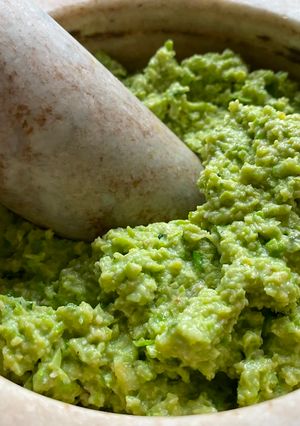
Broad Bean Pesto

Broad beans (also known as fava beans) are the original Old World bean. There is evidence of cultivation as long as 10,000 years ago in the Fertile Crescent situated between the Armenian Highland and the Arabian Desert.
The beans were among the first crops introduced to Britain by Neolithic farmers, around 5,000 years ago and were historically known as Celtic or horse beans. They were more widely grown from the Bronze Age and the beans remained an important part of the British diet (particularly amongst peasants) through the Medieval period, as a protein-rich food that could be stored and eaten year-round. They were commonly eaten as a porridge or made into bread.
As the country became wealthier, farming became more productive and food storage improved and meat and dairy became more widely available replacing beans and other pulses as our main source of protein. In the 18th and 19th century they were known as Windsor beans and served as a side dish with butter and parsley.
Sicilians believe broad beans bring good luck and often keep a dried bean in their pocket. I’ve made pesto by combining these protein rich beans with peas, herbs, cheese, pine nuts, lemon, garlic and anchovies in olive oil.
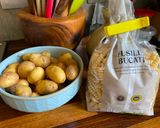
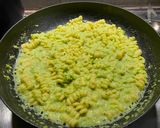
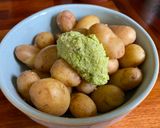
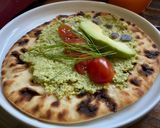
Serve folded through a Southern Italian corkscrew-shaped pasta such as Busiate or Fusilli Bucati or on crushed Jersey Royals or slather on a flatbread.
Broad Bean Pesto
Broad beans (also known as fava beans) are the original Old World bean. There is evidence of cultivation as long as 10,000 years ago in the Fertile Crescent situated between the Armenian Highland and the Arabian Desert.
The beans were among the first crops introduced to Britain by Neolithic farmers, around 5,000 years ago and were historically known as Celtic or horse beans. They were more widely grown from the Bronze Age and the beans remained an important part of the British diet (particularly amongst peasants) through the Medieval period, as a protein-rich food that could be stored and eaten year-round. They were commonly eaten as a porridge or made into bread.
As the country became wealthier, farming became more productive and food storage improved and meat and dairy became more widely available replacing beans and other pulses as our main source of protein. In the 18th and 19th century they were known as Windsor beans and served as a side dish with butter and parsley.
Sicilians believe broad beans bring good luck and often keep a dried bean in their pocket. I’ve made pesto by combining these protein rich beans with peas, herbs, cheese, pine nuts, lemon, garlic and anchovies in olive oil.
Serve folded through a Southern Italian corkscrew-shaped pasta such as Busiate or Fusilli Bucati or on crushed Jersey Royals or slather on a flatbread.
 Open in Cookpad App
Steps
- 1
Place the pasta (or Jersey Royals) in a pan of boiling water to cook for the required time.
- 2
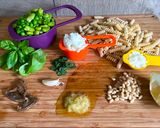
Pound the garlic in a pestle and mortar with a pinch of salt until reduced to a pulp. Add the pine nuts and pound again. Add the basil and mint followed by the peas and beans then the anchovy fillets and a tbsp of their oil, ricotta and mash everything together. Season with salt and pepper and drizzle in the extra virgin olive oil.
- 3
Drain the pasta/potatoes and fold through the pesto. You may want to loosen the pasta a little with a splash of pasta water. Either serve hot or cold as a pasta or potato salad or with a flatbread and avocado/tomato slices.

Similar Recipes
More Recipes
-


-
Garlic-Lemon Pepper Chicken Wings

-

-

Coffee and Hazelnut No Churn Ice Cream

-
Mix Veg. Kofta in Tomato Gravy

-


-
Spiced Chai (Cooking With Spice Cookbook)
-
Mango Smoothie Bowl With Nuts And Mix Seeds

-

-
California Farm Fresh Egg Rice Noodles

-

-
Spinach and Mushroom Enchiladas

-

-

-

-


-

-

-
-
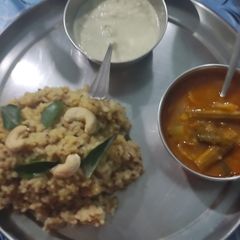
Samai Pongal with narial chutney and Sambar








Comments (2)