CookpadCookpad
Guest
Register or Log In
Save and create recipes, send cooksnaps and more
  • Search
  • Premium
    • Top Cooksnapped Recipes
    • Top Viewed Recipes
  • Premium
  • Challenges
  • FAQ
  • Send Feedback
  • Region
  • Your Collection
Your Collection
To start creating your recipe library, please register or login.
Key Sega Wat - Ethiopian spicy beef stew
Save this recipe to come back to it later.
  • Add Cooksnap
  • Add to folders
  • Print
  • Share
    • Copied!
    • Email
    • Facebook
    • Pin it
    • Twitter
  • Report Recipe
  • See report
  • Edit recipe
  • Delete
CookpadCookpad
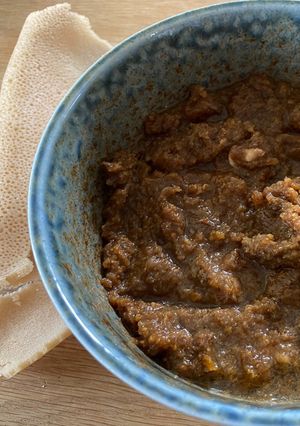
A picture of Key Sega Wat - Ethiopian spicy beef stew.

Key Sega Wat - Ethiopian spicy beef stew

Laura
Laura @FeelBetter
Milton Keynes, England

Sega (beef) wat (stew) is an Ethiopian dish. The depth and complexity is superb; rich and earthy and quite delicious. There are two versions, alicha (mild) and key (spicy), the difference being down to the spice blend, berbere, an Amharic word meaning ‘pepper’ or ‘hot’.

Berbere originates from Ethiopia and Eritrea. Aksumites traded spices such as black peppercorns, cumin, cinnamon, cardamom, nutmeg, ginger, cloves and turmeric with China. Like many spice blends there is no single standard recipe for berbere but usually includes these spices plus red chilli, fenugreek, coriander and allspice.

Onions are slowly cooked in nit’ir qibe (niter kibbeh), an Ethiopian spiced, clarified butter that is infused with herbs and local spices, besobela, kosseret and korarima (false or Ethiopian cardamom). As the ingredients are hard to find and as the berbere gives this dish one heck of a punch, ghee can be used instead.

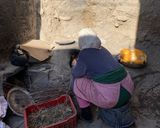
It is traditionally served with injera which is a fermented flatbread made from teff flour. Teff is one of the earliest domesticated plants having its origin in Ethiopia and Eritrea between 4000 and 1000 BCE. It is expensive as it can only be grown in areas with a decent amount of rainfall. Traditionally a clay plate called a mitad is placed over a fire to bake the injera. It develops a porous and slightly spongy texture ideal for picking up the stew and mopping up any leftover sauce. Although sour in flavour, it marries well with the stew #February2026

Sega (beef) wat (stew) is an Ethiopian dish. The depth and complexity is superb; rich and earthy and quite delicious. There are two versions, alicha (mild) and key (spicy), the difference being down to the spice blend, berbere, an Amharic word meaning ‘pepper’ or ‘hot’.

Berbere originates from Ethiopia and Eritrea. Aksumites traded spices such as black peppercorns, cumin, cinnamon, cardamom, nutmeg, ginger, cloves and turmeric with China. Like many spice blends there is no single standard recipe for berbere but usually includes these spices plus red chilli, fenugreek, coriander and allspice.

Onions are slowly cooked in nit’ir qibe (niter kibbeh), an Ethiopian spiced, clarified butter that is infused with herbs and local spices, besobela, kosseret and korarima (false or Ethiopian cardamom). As the ingredients are hard to find and as the berbere gives this dish one heck of a punch, ghee can be used instead.

It is traditionally served with injera which is a fermented flatbread made from teff flour. Teff is one of the earliest domesticated plants having its origin in Ethiopia and Eritrea between 4000 and 1000 BCE. It is expensive as it can only be grown in areas with a decent amount of rainfall. Traditionally a clay plate called a mitad is placed over a fire to bake the injera. It develops a porous and slightly spongy texture ideal for picking up the stew and mopping up any leftover sauce. Although sour in flavour, it marries well with the stew #February2026

Read more

Key Sega Wat - Ethiopian spicy beef stew

Laura
Laura @FeelBetter
Milton Keynes, England

Sega (beef) wat (stew) is an Ethiopian dish. The depth and complexity is superb; rich and earthy and quite delicious. There are two versions, alicha (mild) and key (spicy), the difference being down to the spice blend, berbere, an Amharic word meaning ‘pepper’ or ‘hot’.

Berbere originates from Ethiopia and Eritrea. Aksumites traded spices such as black peppercorns, cumin, cinnamon, cardamom, nutmeg, ginger, cloves and turmeric with China. Like many spice blends there is no single standard recipe for berbere but usually includes these spices plus red chilli, fenugreek, coriander and allspice.

Onions are slowly cooked in nit’ir qibe (niter kibbeh), an Ethiopian spiced, clarified butter that is infused with herbs and local spices, besobela, kosseret and korarima (false or Ethiopian cardamom). As the ingredients are hard to find and as the berbere gives this dish one heck of a punch, ghee can be used instead.

It is traditionally served with injera which is a fermented flatbread made from teff flour. Teff is one of the earliest domesticated plants having its origin in Ethiopia and Eritrea between 4000 and 1000 BCE. It is expensive as it can only be grown in areas with a decent amount of rainfall. Traditionally a clay plate called a mitad is placed over a fire to bake the injera. It develops a porous and slightly spongy texture ideal for picking up the stew and mopping up any leftover sauce. Although sour in flavour, it marries well with the stew #February2026

Sega (beef) wat (stew) is an Ethiopian dish. The depth and complexity is superb; rich and earthy and quite delicious. There are two versions, alicha (mild) and key (spicy), the difference being down to the spice blend, berbere, an Amharic word meaning ‘pepper’ or ‘hot’.

Berbere originates from Ethiopia and Eritrea. Aksumites traded spices such as black peppercorns, cumin, cinnamon, cardamom, nutmeg, ginger, cloves and turmeric with China. Like many spice blends there is no single standard recipe for berbere but usually includes these spices plus red chilli, fenugreek, coriander and allspice.

Onions are slowly cooked in nit’ir qibe (niter kibbeh), an Ethiopian spiced, clarified butter that is infused with herbs and local spices, besobela, kosseret and korarima (false or Ethiopian cardamom). As the ingredients are hard to find and as the berbere gives this dish one heck of a punch, ghee can be used instead.

It is traditionally served with injera which is a fermented flatbread made from teff flour. Teff is one of the earliest domesticated plants having its origin in Ethiopia and Eritrea between 4000 and 1000 BCE. It is expensive as it can only be grown in areas with a decent amount of rainfall. Traditionally a clay plate called a mitad is placed over a fire to bake the injera. It develops a porous and slightly spongy texture ideal for picking up the stew and mopping up any leftover sauce. Although sour in flavour, it marries well with the stew #February2026

Read more
Saved
Save this recipe to come back to it later.
Edit recipe
See report
Add to folders
Add CooksnapAdd Cooksnap
ShareShare
  • Copied!
  • Email
  • Facebook
  • Pin it
  • Twitter
PrintPrint
  • PrintPrint
  • Add CooksnapAdd Cooksnap
  • Report Recipe
  • See report
  • Delete
Share
  • Copied!
  • Email
  • Facebook
  • Pin it
  • Twitter
Save this recipe to come back to it later.
  • Add Cooksnap
  • Add to folders
  • Print
  • Report Recipe
  • See report
  • Edit recipe
  • Delete

Ingredients

2 hours
4 servings
  1. 850 gchuck steak, cut into cubes
  2. 60 gnit’ir qibe or ghee
  3. 700 g(2 ½ large) brown onions, peeled and pureed
  4. 6 clovesgarlic, peeled and minced
  5. 5 cmpiece of ginger, peeled and minced
  6. 20– 60 g berbere spice mix (see below)
  7. 1 tspsalt
  8. 250 mlrich beef stock made up to 500 ml with water
  9. To serve:
  10. injera
  11. Berbere Spice Blend:
  12. 4 tbspdried chilli flakes
  13. 2 tbsppaprika (optional)
  14. 2 tspdried onion flakes
  15. 1 tspginger powder
  16. 1 tspground coriander
  17. 1 tspground fenugreek
  18. 3/4 tspground black cardamon
  19. 1/2 tspground cumin
  20. 1/2 tspground cinnamon
  21. 1/2 tspgarlic granules
  22. 1/2 tspblack pepper
  23. 1/4 tspground cloves
  24. 1/4 tspground nutmeg
  25. 1/4 tspturmeric
  26. 1/4 tspground allspice
Cookpad Open in Cookpad App
Saved
Save this recipe to come back to it later.

Steps

2 hours
  1. 1

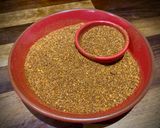
    Berbere spice mix: If using whole spices, toast in a dry, hot pan, shaking to prevent scorching. Leave to cool. Add to the ground ingredients and blitz. Store in a glass jar.
    A picture of step 1 of Key Sega Wat - Ethiopian spicy beef stew.
    A picture of step 1 of Key Sega Wat - Ethiopian spicy beef stew.
  2. 2

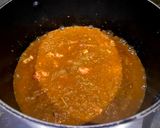
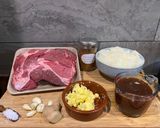
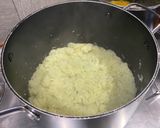
    Add the onions to a large pot and slowly cook for around 10 minutes until any water has evaporated. Stir in 20g nit’ir qibe or ghee and cook on a gentle heat for 20 minutes, stirring occasionally. Add another 20 g of nit’ir qibe, garlic and ginger and cook for another 15 minutes, stirring occasionally. Stir in the remaining 20g of nit’ir qibe along with the berbere spice blend. Use 20g of the spice for a mild-ish flavour or 60g for a fiery flavour. I added 40g and it was sufficiently hot.
    A picture of step 2 of Key Sega Wat - Ethiopian spicy beef stew.
    A picture of step 2 of Key Sega Wat - Ethiopian spicy beef stew.
    A picture of step 2 of Key Sega Wat - Ethiopian spicy beef stew.
  3. 3

    Cook for 2 minutes before adding the beef stock and water. Season with the salt. Add the beef and bring to a boil. Cover and place in the oven at 160 degree C for 1 ½ hours stirring occasionally until the beef is tender and the sauce has thickened. Check the seasoning. Serve hot with injera.
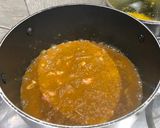
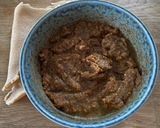
    A picture of step 3 of Key Sega Wat - Ethiopian spicy beef stew.
    A picture of step 3 of Key Sega Wat - Ethiopian spicy beef stew.
Saved
Save this recipe to come back to it later.
Edit recipe
See report
Add to folders
Add CooksnapAdd Cooksnap
ShareShare
  • Copied!
  • Email
  • Facebook
  • Pin it
  • Twitter
PrintPrint
  • PrintPrint
  • Add CooksnapAdd Cooksnap
  • Report Recipe
  • See report
  • Delete

Cooksnaps

Saved
Save this recipe to come back to it later.
  • Add Cooksnap
  • Add to folders
  • Print
  • Share
    • Copied!
    • Email
    • Facebook
    • Pin it
    • Twitter
  • Report Recipe
  • See report
  • Edit recipe
  • Delete

Copied!

Laura
Laura @FeelBetter
on February 06, 2025 17:24
Milton Keynes, England
Out and Out FoodieSandgrounder#FeelBetterMK
Read more

Comments (3)

Laura
Laura @FeelBetter
February 06, 2025 22:02
Best cold remedy I’ve found is grated turmeric, grated ginger, whole lemon (zest and juice), pinch pepper, add hot water and let it seep. Add honey to taste.Pineapple (especially the core) stronger than any cough medicine you will find on the chemist’s shelf due to its high levels of bromelain. Sambucol (black elderberry) is good for your immune system.I wish you a speedy recovery.
Guest
Add a comment
0/0

Similar Recipes

More Recipes

  1. A picture of Mango Lassi.

    Mango Lassi

    Beena Radia Beena Radia
  2. A picture of Diet, Date biscuits 🫓 🫓.

    Diet, Date biscuits 🫓 🫓

    Kulsoom Bukhari Kulsoom Bukhari
  3. A picture of Mango popsicle.

    Mango popsicle

    Laju Gehani Laju Gehani
  4. A picture of Lemon Chaska Cooler Recipe.

    Lemon Chaska Cooler Recipe

    Namrata sarmah Namrata sarmah
  5. A picture of Tomato sar.

    Tomato sar

    Hema Wane Hema Wane
  6. A picture of Nnamani Pork and Egusi Soup.

    Nnamani Pork and Egusi Soup

    ifuchi ifuchi
  7. A picture of Goong Ob Woon Sen - Thai Baked Glass Noodles with Prawns - Truly Amazing - Enjoy :P.

    Goong Ob Woon Sen - Thai Baked Glass Noodles with Prawns - Truly Amazing - Enjoy :P

    farang31 farang31
  8. A picture of The Most Perfect Rack of Lamb - Ok Its Expensive so We Need to Get It Right First Time :P - Enjoy.

    The Most Perfect Rack of Lamb - Ok Its Expensive so We Need to Get It Right First Time :P - Enjoy

    farang31 farang31
  9. A picture of The Best Homemade Pancake Recipe.

    The Best Homemade Pancake Recipe

    Erin H Erin H
  10. A picture of Bhindi Fry.

    Bhindi Fry

    Anas Wajahat Anas Wajahat
  11. A picture of Cinnamon Toast Marshmallow Cookies.

    Cinnamon Toast Marshmallow Cookies

    Raven Raven
  12. A picture of Roast Beef & Caramelized Onion Grilled Cheese.

    Roast Beef & Caramelized Onion Grilled Cheese

    Raven Raven
  13. A picture of Big Mac Mini Meatloaves.

    Big Mac Mini Meatloaves

    snackle time snackle time
  14. A picture of California Farm Prime Rib Curry.

    California Farm Prime Rib Curry

    Hobby Horseman Hobby Horseman
  15. A picture of Hara Chana Broccoli Subji.

    Hara Chana Broccoli Subji

    Nutan Shah Nutan Shah
  16. A picture of Amla Til ladoo (Indian gooseberry sesame seeds ladoo).

    Amla Til ladoo (Indian gooseberry sesame seeds ladoo)

    Deepa Rupani Deepa Rupani
  17. A picture of Palak-Peas-Paneer Paratha.

    Palak-Peas-Paneer Paratha

    Bina Anjaria Bina Anjaria
  18. A picture of Street Shop Coconut Runny Chutney (Rottukadai Thengai Thanni Chutney).

    Street Shop Coconut Runny Chutney (Rottukadai Thengai Thanni Chutney)

    Prasel Prasel
  19. A picture of Green Garlic Pakoda.

    Green Garlic Pakoda

    Rita Talukdar Adak Rita Talukdar Adak
  20. A picture of Mung Bean Sprouts.

    Mung Bean Sprouts

    Archana Agrawal Archana Agrawal
  21. A picture of Gond Sukhadi/Gud Papdi.

    Gond Sukhadi/Gud Papdi

    Sangita Vyas Sangita Vyas
  22. A picture of Stuffed Chillies/ Bharwa Mirch.

    Stuffed Chillies/ Bharwa Mirch

    Sangita Vyas Sangita Vyas
  23. A picture of Cream Cheese Corn Sandwiches.

    Cream Cheese Corn Sandwiches

    Sanuber Ashrafi Sanuber Ashrafi
  24. A picture of Big Mac Mini Meatloaves.

    Big Mac Mini Meatloaves

    snackle time snackle time
https://cookpad.wasmer.app/us/recipes/24406367
Cookpad Open in Cookpad App

About Us

Our mission at Cookpad is to make everyday cooking fun, because we believe that cooking is key to a happier and healthier life for people, communities and the planet. We empower home cooks all over the world to help each other by sharing their recipes and cooking experiences.

Subscribe to Premium for exclusive features & benefits!

Cookpad Communities

🇺🇸 United States 🇬🇧 United Kingdom 🇪🇸 España 🇦🇷 Argentina 🇺🇾 Uruguay 🇲🇽 México 🇨🇱 Chile 🇻🇳 Việt Nam 🇹🇭 ไทย 🇮🇩 Indonesia 🇫🇷 France 🇸🇦 السعودية 🇹🇼 臺灣 🇮🇹 Italia 🇮🇷 ایران 🇮🇳 India 🇭🇺 Magyarország 🇳🇬 Nigeria 🇬🇷 Ελλάδα 🇲🇾 Malaysia 🇵🇹 Portugal 🇺🇦 Україна 🇯🇵 日本 See All

Learn More

Cookpad Premium Careers Feedback Blog Terms of Service Community Guidelines Privacy Policy Frequently Asked Questions

Download our app

Open Cookpad App on Google Play Open Cookpad App on App Store
Copyright © Cookpad Inc. All Rights Reserved
close